
An estate-planning ADU can help you preserve a valuable family property by giving adult children or older relatives independent housing on the same lot. California defines an ADU as a secondary dwelling unit with complete independent living facilities and identifies detached, attached, and converted-space forms, as explained by the California Department of Housing and Community Development. This can support multigenerational living and help reduce pressure to sell the primary residence. But succession planning involves more than construction: ownership, future occupancy, and transfer plans need to align.
An ADU may also support your property-value strategy, but appreciation is not assured. A 2024 Los Angeles study associated ADU presence with 7%–8% higher assessed parcel values overall and nearly 9% for recently sold properties, as reported in Real Estate Economics. All County Development manages design, permitting, and construction across Los Angeles, helping you plan a building that fits your property’s long-term role.
Key Takeaways
- A California ADU can make multigenerational living more practical, but an ADU does not determine who inherits the property, so align title, trust instructions, occupancy, maintenance, and future decision-making before construction.
- A 2024 Los Angeles study associated ADUs with 7%–8% higher assessed parcel values overall and nearly 9% for recently sold properties, but appreciation is not guaranteed; a 2021 statewide survey’s $150,000 median cost, or $250 per square foot, is a historical benchmark rather than a current estimate.
- California Proposition 19’s parent-child reassessment exclusion applies only when a qualifying family home was the transferor’s principal residence and becomes the transferee’s principal residence, or the property is a family farm; qualifying transfers from February 16, 2025, through February 15, 2027, have a limit of the factored base-year value plus $1,044,586, and the transferee must apply for an eligible exemption within one year.
- California generally requires a permitting agency to approve or deny a completed ADU or JADU application within 60 days when an existing dwelling is on the lot, while JADUs sharing sanitation facilities require owner occupancy starting January 1, 2026, so confirm local requirements and design choices before committing to a plan.
- A property-specific brief covering title, intended occupants, future rental plans, access, and maintenance gives your advisers and builder a stronger basis for planning; All County Development manages ADU design, permitting, and construction as connected phases.
How Can an ADU Support Family Succession?
An ADU can help you keep family connected to a valuable property by giving adult children, older relatives, or other family members independent housing nearby.
Living close while maintaining separate spaces can make multigenerational arrangements more workable. An older relative can live near family support while maintaining privacy, and an adult child can have a separate home on the family property. Planning for these needs can help relatives remain on the property rather than feel pressured to sell the primary home when household needs change.
Building an ADU does not determine who inherits the property. Instead, an ADU can support your succession plan by making continued family use more practical. Ownership and inheritance arrangements still need to establish who receives the property and how it will be managed. Make sure your plans for family use align with your broader goal of keeping the property in the family.
Before building, decide who may live in the ADU, who will handle maintenance, and how those responsibilities will be managed over time. Consider whether the unit’s use may change as relatives’ circumstances shift. A clear plan for occupancy and upkeep can help prevent the ADU from becoming a source of disagreement among family members.
Can an ADU Preserve Property Value?
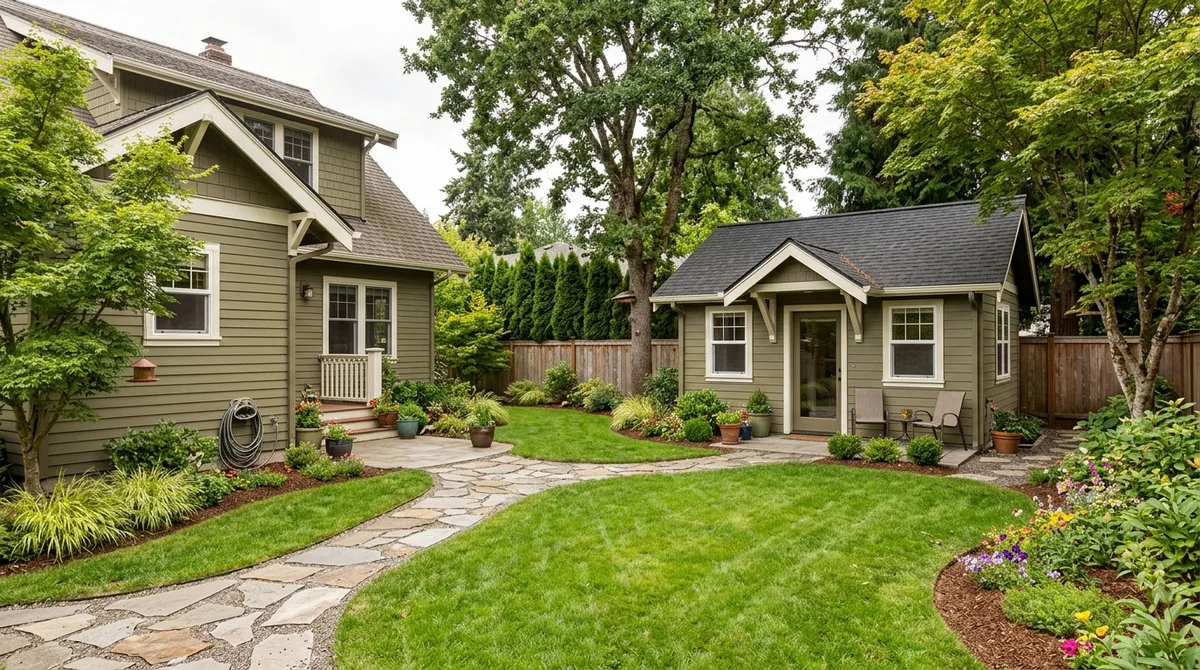
An ADU can support your long-term property-value planning, but it cannot guarantee appreciation or a particular resale price. A 2024 study using Los Angeles assessor data associated ADU presence with 7%–8% higher assessed parcel values overall and almost 9% higher values for recently sold properties. This association offers useful context, not a forecast for your property.
California assesses new construction separately from the existing home: completed new construction is appraised for its added market value, while the existing property value is not affected by that construction assessment, under California State Board of Equalization guidance. The added value may still affect your property’s assessment, so include the ADU’s potential tax cost in your long-term ownership plan.
A 2021 statewide homeowner survey reported a median ADU construction cost of $150,000, or $250 per square foot. These are historical benchmarks, not current estimates. Your actual financial outcome depends on project scope and financing, as well as ongoing maintenance and insurance costs. Ask your insurer how the added structure and its intended use may affect your coverage.
Rental income may help offset expenses or support future family-property costs, but it is one planning consideration, not a guaranteed return. Vacancy, maintenance, financing terms, insurance, and the unit’s eventual use all affect whether renting fits your goals. We manage design, permitting, and construction as connected phases, helping you consider the ADU’s intended role alongside the practical costs of building and owning it.
How Do You Coordinate an ADU With a Trust?
Coordinate an ADU with a trust by aligning the property’s title, intended occupants, and transfer instructions before finalizing design and construction decisions. Confirm how the property is titled, who has authority to approve changes, and whether a will or trust addresses who should inherit the property and how relatives may use it. Review proposed ownership or title changes with your estate-planning and tax advisers to ensure the building plan supports your succession plan.
A family member’s expected inheritance or future occupancy does not, by itself, determine how the property will transfer or who will manage it. Include the intended arrangement in your broader estate plan, along with practical expectations for shared maintenance, access, and responsibility. California’s Proposition 19 parent-child property-tax reassessment exclusion is limited to a family home that was the transferor’s principal residence and becomes the transferee’s principal residence, or to a family farm, as explained by the California State Board of Equalization.
For qualifying transfers from February 16, 2025, through February 15, 2027, the exclusion-value limit is the home’s or farm’s factored base-year value plus $1,044,586. The transferee must apply for a homeowners’ or disabled-veterans’ exemption within one year. These California property-tax conditions are separate from federal estate-tax rules: for people who die in 2026, the federal estate-tax basic exclusion amount is $15,000,000, according to the Internal Revenue Service.
Inheritance can also affect the property’s tax basis. Inherited property generally receives a basis equal to its fair market value on the decedent’s date of death, subject to exceptions such as alternate valuation or special-use valuation, under IRS guidance on basis. Neither inheritance nor Proposition 19 determines the construction assessment for an ADU. That assessment concerns the value added by the new construction.
If you are considering separate ownership of the ADU, California AB 1033 allows a local agency to permit separate condominium conveyance of an ADU and primary home, subject to applicable requirements, including lienholder consent and compliance with relevant laws. Check whether your local agency permits this option, and ask your advisers whether it fits your inheritance plan before relying on it, as outlined in the California Department of Housing and Community Development’s ADU guidance.
What California ADU Rules Affect Your Plan?
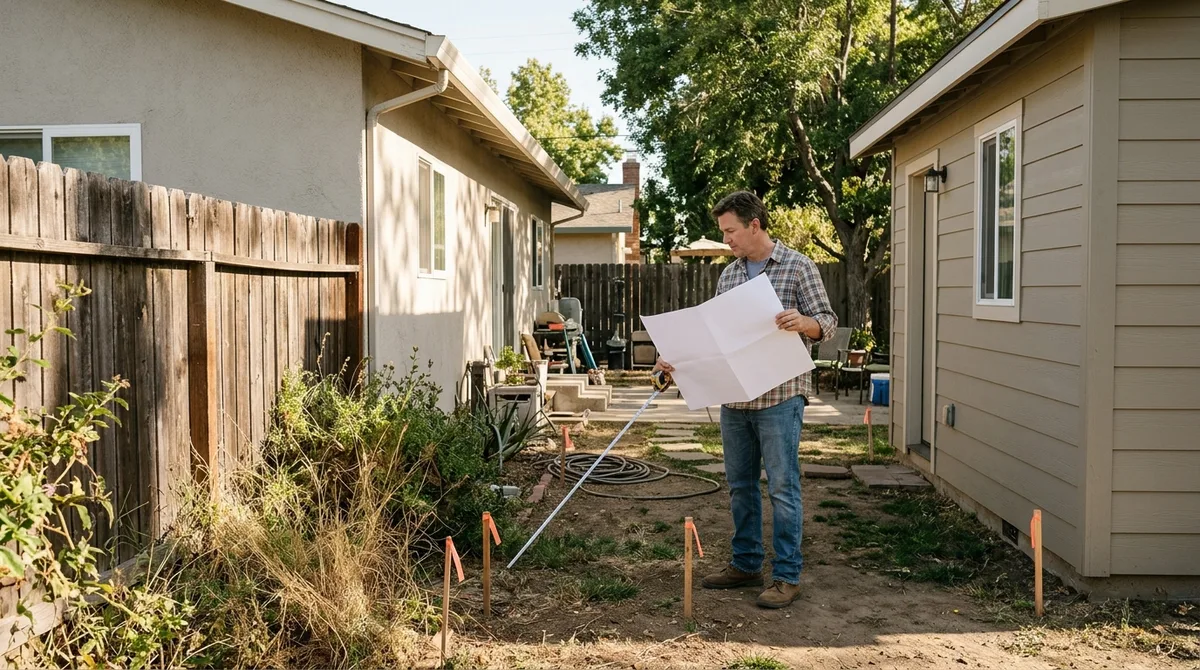
California ADU rules, local zoning, and site conditions determine what you can build, how permits are reviewed, which fees apply, and whether your intended family arrangement is allowed. Your property’s layout and applicable state and local requirements shape setbacks, height, and parking, so a design that works on one lot may not fit yours.
Under California Government Code sections 66317 and 66335, a permitting agency generally must approve or deny a completed ADU or JADU application within 60 days when an existing dwelling is on the lot. That review period does not eliminate project-specific design and permitting questions. If you convert an existing garage or other structure, evaluate its current footprint and condition, as well as access and utility needs. A new detached unit raises different questions, including where it can fit on your lot and how its placement relates to setbacks, height, and parking rules.
A JADU is created within or attached to a proposed or existing single-family residence. Your choice affects how the unit fits your property and supports your family’s intended use.
JADU occupancy rules can directly affect your estate plan’s housing arrangement. Effective January 1, 2026, a JADU that shares sanitation facilities with the primary residence requires owner occupancy. Owner occupancy is not required when the JADU has separate sanitation facilities. If you intend for a family member to occupy the JADU while you live elsewhere, make sure the sanitation design and applicable occupancy rule align with that plan.
Impact fees also vary by unit size. ADUs of 750 square feet or less and JADUs of 500 square feet or less are exempt from specified local-agency, special-district, and water-corporation impact fees. Fees for larger ADUs must be proportional to the primary dwelling’s size.
What Should You Design for Long-Term Family Use?
Design your ADU for independent living, privacy, safe access, comfort, and changing needs. Consider the possibility that a resident may age in place or that the unit may later serve a different purpose. A complete kitchen and bathroom, a distinct entrance, and thoughtfully placed windows can support autonomy while limiting views and noise between the ADU and main home.
Plan for convenient, safer movement with a step-free route where feasible, well-lit paths, and bathroom features such as a curbless shower and securely installed grab bars. A flexible room layout and durable, easy-to-maintain finishes can help the unit remain comfortable as family circumstances change. If you may rent the unit in the future, consider how separate access, sound control, and resilient materials could support that use without compromising the property’s overall character.
Make sure the ADU works as part of your whole property. Consider how its entrance and outdoor space relate to the main home, where residents can sit privately, and how the design affects shared yards and circulation. Plan utility locations and access so maintenance can be handled without unnecessarily disrupting either household.
All County Development serves Los Angeles communities including Tarzana, Beverly Hills, and Santa Monica, bringing custom building and remodeling experience to complex residential projects. We manage each phase, from initial design and permitting through final construction, so the layout, accessibility details, materials, and utility coordination are considered together. A tailored design and coordinated build can help you create a functional ADU that supports your property’s long-term family plan and value goals.
Should the ADU House Family or Tenants?
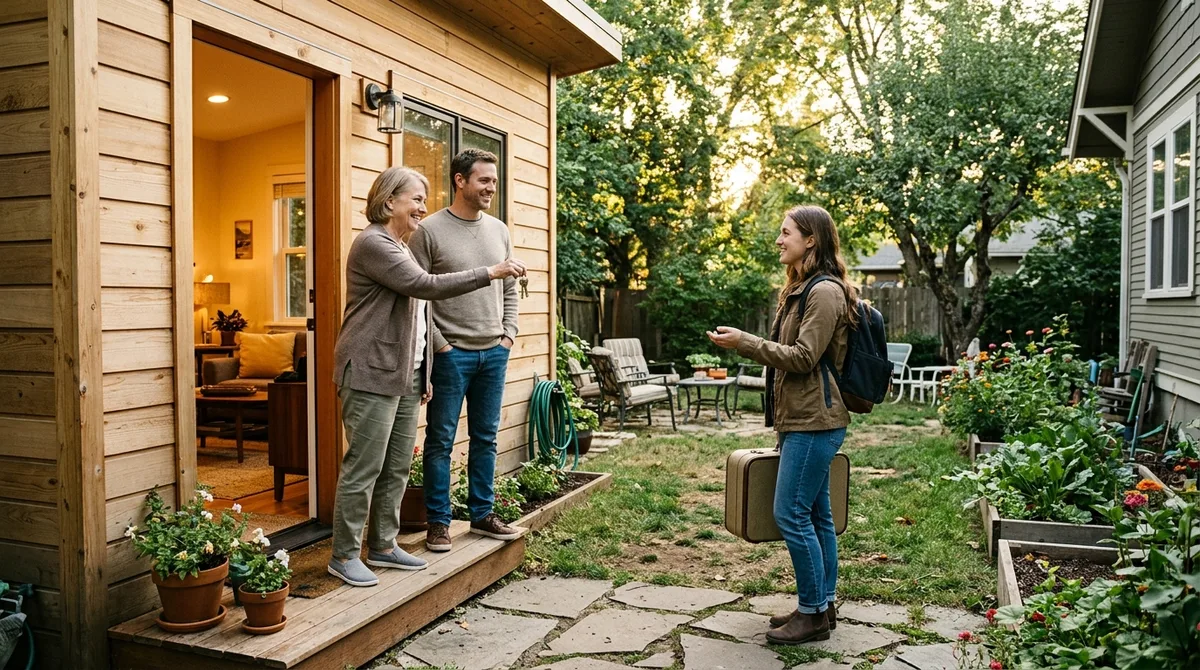
Choose family occupancy when nearby support and long-term family use matter most. Consider tenants when flexibility and potential rental income better fit your plans. Rental income is not guaranteed, and the right choice depends on who is likely to use the unit and for how long. A relative’s temporary need may call for a different layout and arrangement than a long-term family residence. Think through privacy and access for both households. A separate entrance and thoughtfully placed windows can support independence, while shared paths, yards, or utility areas may require clear expectations. Decide who will handle routine upkeep and how repairs will be coordinated, especially if the occupant and property owner live in different units. Future use should also fit your succession goals. A family member’s occupancy can support continued family use of the property, while renting may offer flexibility if family needs change. Neither choice automatically changes ownership or inheritance rights. Include those arrangements in your broader estate plan. You can discuss a property-specific ADU, home addition, or garage conversion with All County Development, which manages design, permitting, and construction. Clarify your family and financial objectives first, then scope a design and permitting plan around the intended occupant, expected duration, access, and maintenance responsibilities.
Plan the Property Before You Build
Before authorizing design, prepare a property-specific brief for your estate-planning attorney, tax adviser, and builder. Include the current title and trust documents, the relatives you expect may live on the property, whether the unit might later be rented, and who should manage maintenance. Mark the existing home, garage, access routes, and likely ADU location on a site plan. This gives your advisers and design team concrete information to assess whether a detached unit, addition, or garage conversion best supports your family’s plans.
Ask your attorney and tax adviser to review the proposed ownership and occupancy arrangement before making construction decisions. If separate ownership of the ADU is part of your plan, confirm local availability and review the applicable requirements with your advisers. Do not assume that a separate unit automatically means a separate title.
All County Development can evaluate your property and develop a coordinated design, permitting, and construction plan around your intended family use. Serving Los Angeles, including Tarzana, Beverly Hills, and Santa Monica, we manage each phase of custom home building and remodeling. Bring your site plan and project brief to a consultation so we can identify design and permitting considerations for your property.
Frequently Asked Questions
1. Can an adult child contribute to ADU construction costs without receiving an ownership interest?
An adult child may contribute to construction costs, but your family should document whether the payment is a gift, loan, or cost-sharing arrangement and state that it does not create an ownership expectation. Have an estate-planning attorney and tax adviser review the written terms alongside the property’s title and estate plan.
2. How can siblings agree on maintenance costs for an inherited home with an ADU?
Siblings can reduce misunderstandings by putting maintenance responsibilities in a written agreement. Specify how routine upkeep and major repairs will be approved and paid for, who will coordinate the work, how expenses will be recorded, and how disagreements will be handled. Ask an estate-planning attorney to review the arrangement.
3. What should a family document if an ADU is intended for a relative’s long-term use?
Document the intended occupant, expected length and terms of occupancy, access to shared areas, utility costs, maintenance duties, and what should happen if the relative’s needs or circumstances change. Coordinate those expectations with the trust or other estate plan, and have an attorney review any separate occupancy agreement.
4. Can an ADU’s intended occupant change after the primary homeowner dies?
The intended occupant may change after the homeowner dies, but next steps should follow the estate plan, any written occupancy arrangement, and applicable property and ADU requirements. Before building, clarify who will have authority to make future occupancy decisions and ask an estate-planning attorney to address the plan in the relevant documents.