
Bathroom remodel labor commonly accounts for 40%–65% of the total project budget, but your actual labor cost depends on location, scope, finishes, and the trades required. As a broad 2026 benchmark, Angi estimates professional bathroom remodels at $6,648–$17,646 overall, with an average project cost of $12,147. These totals include more than labor, so they should not be mistaken for a labor quote.
Use the labor percentage to set expectations, not to predict your final invoice. Replacing fixtures while keeping the existing layout can require a different mix of work than moving plumbing, upgrading electrical, or choosing intricate finishes. A remodel also involves sequencing and coordination, and a typical project takes two to three months from planning through closeout. All County Development has more than 20 years of experience building and remodeling in Los Angeles, including Tarzana, Beverly Hills, and Santa Monica. We manage projects from design and permitting through construction, helping you understand how scope, trades, and finish selections shape a functional, value-driven estimate.
Key Takeaways
Bathroom remodel labor commonly accounts for 40%–65% of your total project budget, but Angi’s 2026 total-project average of $12,147 is not a labor quote; the percentage is only a rough planning reference.
Your bathroom’s scope matters more than its size: keeping the existing plumbing layout can avoid some plumbing changes, while relocating fixtures may add trade work and coordination.
Your finish choices and required trades can change labor needs, so treat Angi’s plumber rates of $45–$200 per hour and electrician rates of $50–$200 per hour as context rather than a prediction of your project’s labor cost.
You can compare labor bids more accurately by giving contractors the same scope and confirming which demolition, installation, finishing, trade work, coordination, exclusions, allowances, and permit responsibilities each estimate covers.
A typical bathroom remodel takes two to three months overall, and All County Development brings more than 20 years of Los Angeles remodeling experience managing projects from design and permitting through construction.
How Much Does Bathroom Remodel Labor Cost?
Bathroom remodel labor commonly accounts for 40%–65% of the total project budget, but your labor-only cost depends on location, scope, finishes, and the trades required. Use that percentage as a planning range, not a guaranteed quote. The work involved in a straightforward replacement can differ substantially from a remodel that changes the layout or calls for specialized finishes. Angi estimates professional bathroom remodels at $6,648–$17,646 overall, with an average total project cost of $12,147. Those are total project figures, not labor-only prices. Applying the labor percentage to the average can provide only a rough allocation, not a universal labor price or a contractor’s quote. Your actual labor share may fall outside that range. Local labor rates, the number and type of trades involved, project complexity, and finish choices all affect the estimate. A project with more demanding installation or coordination may require a different allocation than one with a simpler scope. The percentage alone cannot show how a contractor arrived at a bid or what work it covers. For a useful comparison, ask each contractor to price the same scope and identify the included work. Check that bids reflect the same layout, fixture and finish selections, and project responsibilities. A lower labor figure may not mean a lower cost for equivalent work if proposals include different tasks or leave parts of the project out. All County Development manages projects from design and permitting through construction, helping connect the estimate to the work planned. Compare bids based on matching scope and included work, not labor percentage alone.
What Does Bathroom Remodel Labor Include?
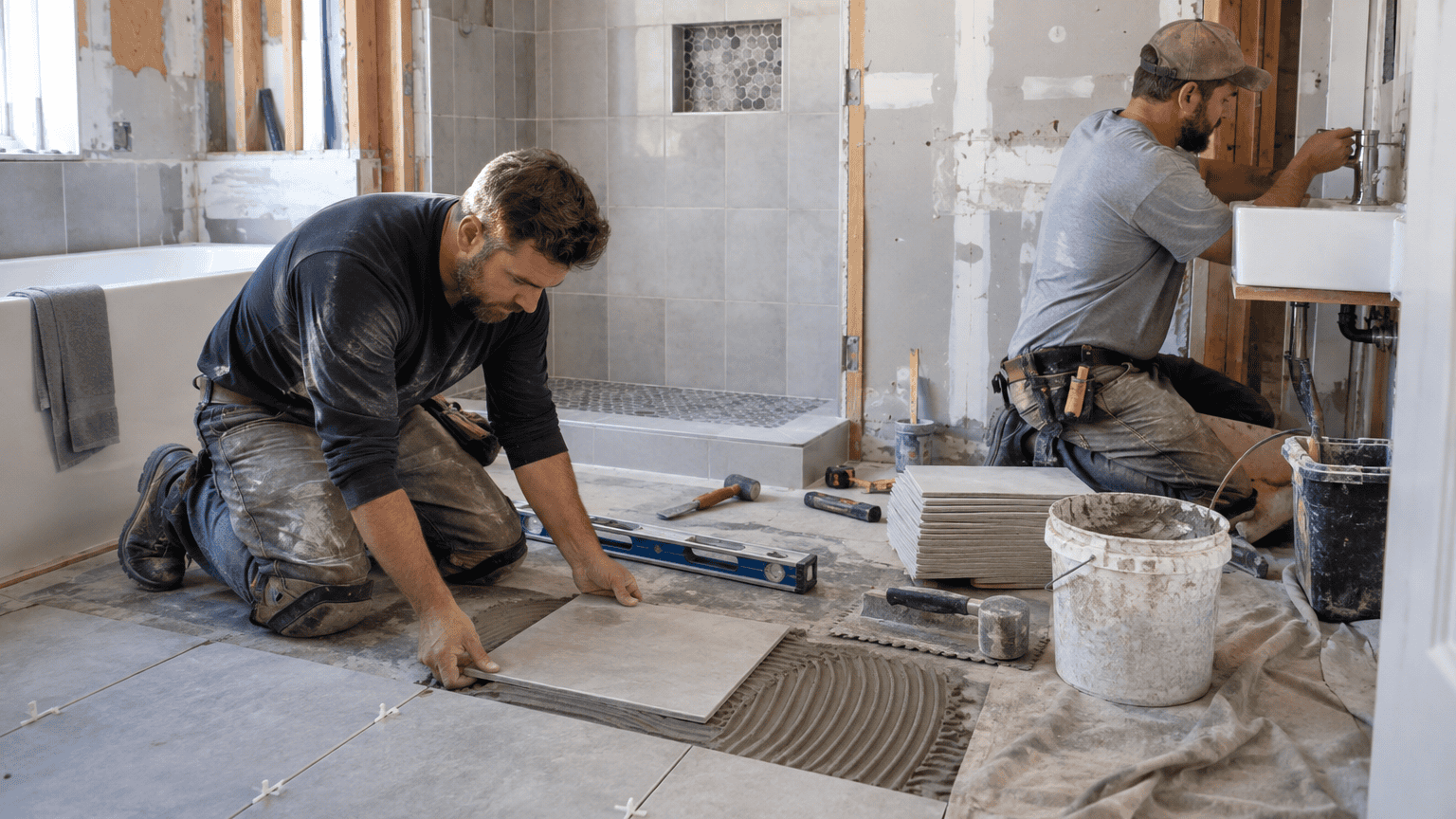
Bathroom remodel labor covers the paid work required to complete the project, from removing old fixtures to installing and finishing new ones, as well as any project coordination included in the estimate. Labor is the work itself, not the cost of tile, fixtures, or other materials.
The people and trades involved depend on the work. A bathroom remodel may require a plumber to alter or connect water and drain lines, and an electrician to install or update lighting, outlets, or wiring. Angi lists plumber rates of $45–$200 per hour and electrician rates of $50–$200 per hour for bathroom remodels. Labor’s share of the budget varies with project complexity and location, so those rates do not determine the labor portion of every estimate.
Contractors can group work in different ways in their estimates. One may list demolition, installation, and finishing as separate labor items, while another may bundle several tasks under a broader label. A line-item name alone does not establish which tasks or responsibilities the price covers.
Before comparing bids, ask whether demolition includes removing and disposing of existing materials, and whether installation covers the fixtures and surfaces in your plan. Confirm which finishing tasks are included, such as completing surface details, and whether project coordination is part of the price. Coordination can include managing the sequence of trades and keeping the work aligned with the agreed scope. All County Development manages projects from design and permitting through final construction, but your estimate should still make clear which project responsibilities are included.
Do not assume every bid uses the same categories or defines labor in the same way. Ask each contractor to clarify the work behind each labor charge so you can compare the same tasks and coordination responsibilities.
How Does Scope Change Labor Cost?
Bathroom remodel labor cost depends more on the work included than on room size alone. A smaller bathroom with extensive fixture and surface replacement can involve more labor than a larger room receiving limited updates because the tasks and trade coordination differ. Angi’s 2026 scope guide estimates total project costs of $3,000–$10,000 for a minor remodel, $10,000–$25,000 for a partial remodel, and $25,000–$80,000 for a full remodel. These are total project estimates, not labor-only prices, so they should not be read as a direct comparison of labor charges. Angi defines a full remodel as replacing fixtures and surfaces while leaving the plumbing layout unchanged. “Full” describes the breadth of the replacement work, not a requirement to move pipes or relocate fixtures. Keeping the existing layout can avoid some plumbing changes and related coordination, although the project still requires labor to remove and install the selected fixtures and surfaces. Changing the layout adds another layer of work. Moving a sink, toilet, or shower can require plumbing alterations, and that work must be coordinated with other parts of the remodel. Depending on the new arrangement, the scope may also call for additional trade work. The effect on labor depends on the specific plan. The scope guide does not establish a standard dollar premium for a layout change. For example, two bathrooms with similar dimensions may have different labor needs if one retains its fixture locations and the other moves them. A scope-based estimate should make clear whether fixture locations stay put, which surfaces and fixtures are being replaced, and what layout changes are included. Those details explain labor more clearly than room size or the label “full remodel” alone.
Why Can Labor Costs Vary So Much?
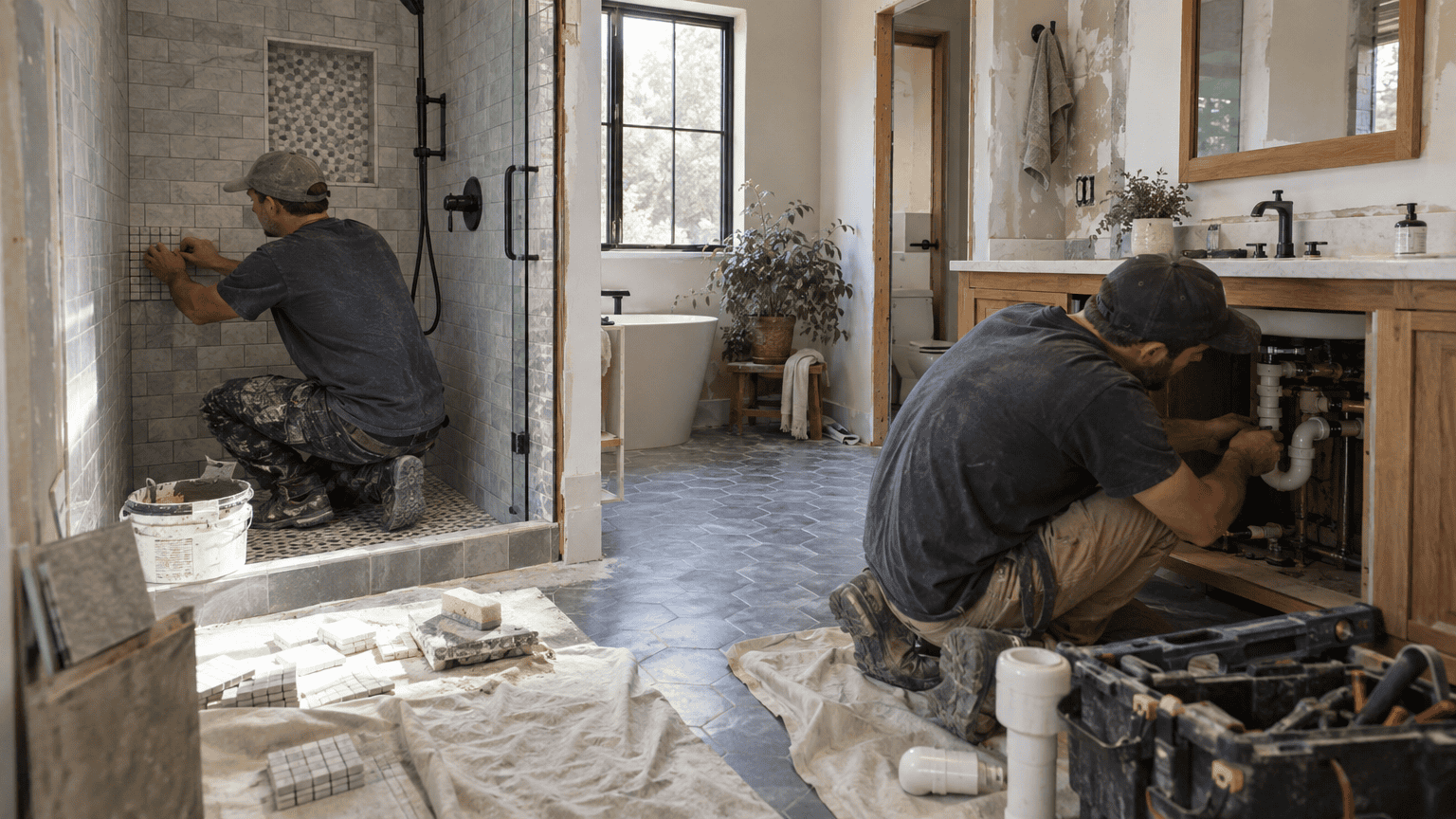
Bathroom remodel labor costs vary because location, project scope, finish choices, required trades, and coordination all affect the amount and type of work involved. Local labor markets and jurisdiction-specific project requirements can affect which specialists you need and how the work is scheduled, so similar room dimensions do not guarantee similar bids.
Trade needs depend on the planned work. A project involving extensive plumbing changes may require a plumber to handle additional pipe or drain work, while changes to wiring, lighting, or outlets can call for an electrician. When several specialists are involved, the estimate reflects both their tasks and the time needed to coordinate work in the right sequence.
Finish choices also affect labor. Straightforward surface installations generally require less detailed fitting than designs with patterned tile, many cuts around niches or edges, or custom pieces that need careful alignment. A complex shower enclosure or detailed trim can add fitting and finishing steps, even when the bathroom footprint is unchanged. Materials are separate from labor, but their installation requirements can affect the time needed for the work.
Project coordination is another factor behind different bids. Trades may need to complete work in sequence, and installations must align with the approved design and site conditions. Angi estimates that a typical bathroom remodel takes two to three months overall, with pre-construction usually taking at least three to four weeks. Planning, permitting, and coordinating the work help explain why the project timeline extends beyond the days spent installing fixtures and finishes.
All County Development manages projects from design and permitting through construction, helping connect those phases. For your budget, look for a bid that reflects the finish details, trade requirements, and coordination involved, not just your bathroom’s size.
Are Hourly Rates the Same as Contractor Labor Costs?
No. Trade hourly rates and employee wage statistics provide useful context, but neither equals a contractor’s customer-facing price or predicts the full labor cost of a bathroom remodel.
Angi lists bathroom-remodel plumber rates of $45–$200 per hour and electrician rates of $50–$200 per hour. Those ranges show the spread in rates for two common trades, but they do not tell you how many hours your project will require, which trades it needs, or how the contractor has structured the estimate.
The U.S. Bureau of Labor Statistics reports a May 2025 median annual wage of $63,800 for plumbers, pipefitters, and steamfitters. BLS plumber wage data measures employee pay, not a contractor billing rate.
The May 2025 median annual wage for electricians was $63,190, according to BLS electrician wage data. BLS wage data measures employee pay, not a contractor billing rate. A contractor’s customer-facing price may also cover business overhead, insurance, estimating and scheduling, tools, travel, and responsibility for completing the contracted work. Annual employee wages also cannot be directly compared with hourly customer rates without information about hours worked and business costs.
Even when two contractors use similar trade rates, their total labor estimates can differ if they anticipate different hours, trade requirements, or coordination needs. A quote may also bundle tasks instead of charging each one at a stated hourly rate. Hourly figures help you understand trade-rate context, but a complete remodel estimate depends on the planned work and how the contractor prices and manages it.
Is Cost Per Square Foot Useful?
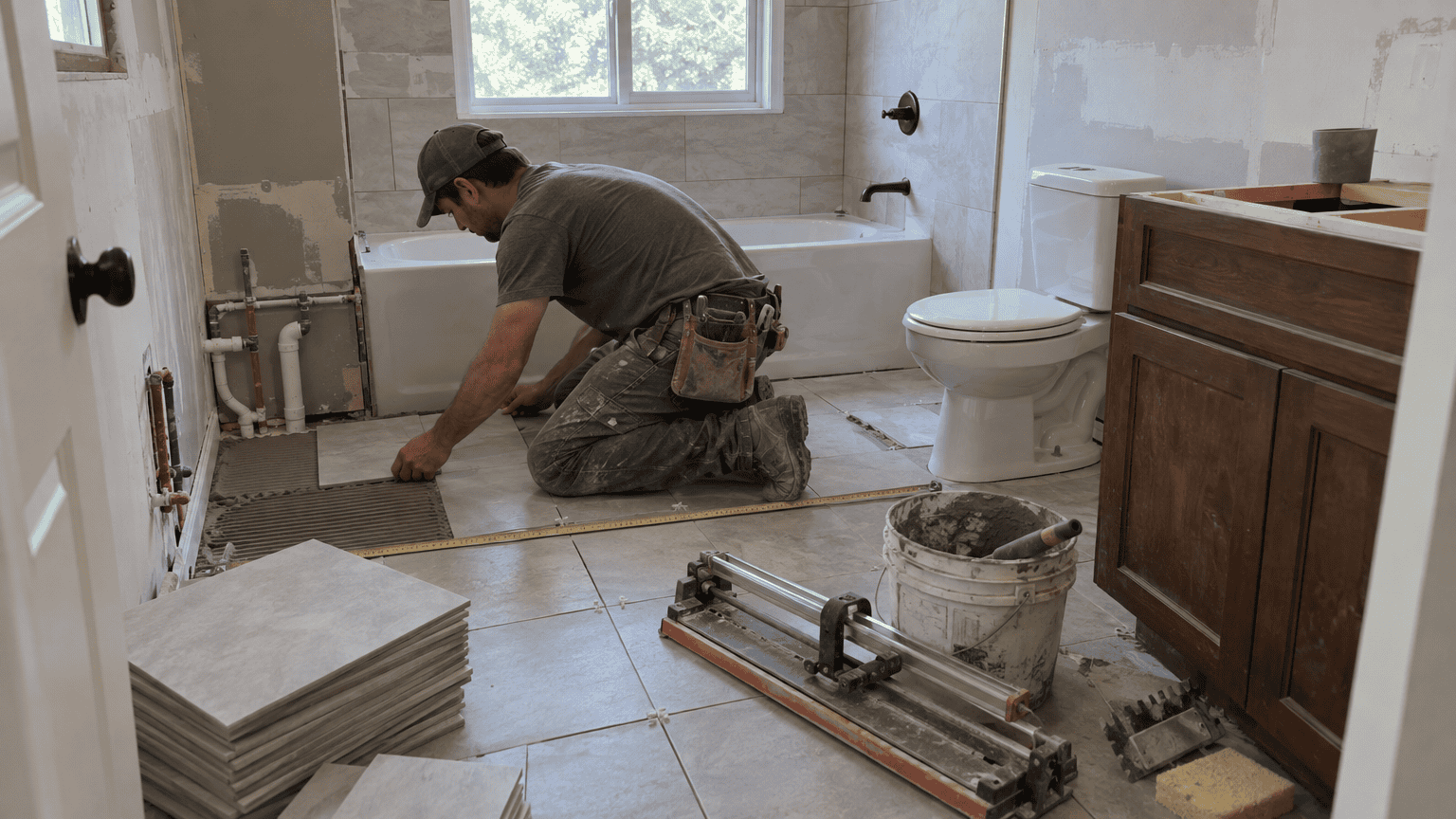
A cost-per-square-foot figure can offer rough context, but it cannot reliably predict bathroom remodel labor by itself. Floor area does not show which trades your project needs, whether plumbing or electrical work will change, or how demanding your selected finishes are.
Two small bathrooms with similar floor areas can require different amounts of labor. Replacing a vanity, toilet, and surfaces while keeping fixture locations is a different scope from moving plumbing, rebuilding a shower, or installing tile with detailed cuts and patterns. The difference comes from the work and coordination involved, not simply the amount of floor space.
When comparing bids for a small bathroom, look at the total project scope and itemized inclusions rather than multiplying the room’s area by a single labor rate. Check whether each estimate covers the same demolition, fixture and surface installation, plumbing or electrical changes, finish work, and coordination. A low square-foot figure may reflect a narrower scope, so confirm which tasks are included before treating bids as comparable.
The 40%–65% labor share is a budget-level reference for estimating how much of a project budget may go to labor. It is not a square-foot formula, a standard labor rate, or a prediction for a particular small bathroom. Use it alongside the planned work and the estimate’s itemized scope, not as a substitute for either.
How Can You Compare Labor Estimates?
You can compare bathroom remodel labor estimates by matching the planned work and checking which trades, coordination, exclusions, allowances, permits, and safety responsibilities each price covers. Use the same project description for every bid. All County Development serves Los Angeles, including Tarzana, Beverly Hills, and Santa Monica, and has over 20 years of experience managing projects from design and permitting through construction. That experience shows why an estimate should state who handles each phase.
Match the scope. List the same fixtures, surfaces, layout, and finish level for each contractor. Specify whether fixture locations stay put and describe any planned plumbing or electrical changes.
Map the trades and coordination. Ask how plumbing and electrical work appear in the estimate, who schedules those trades, and how construction sequencing is handled. Check whether project coordination is included or priced separately.
Check exclusions and allowances. Ask which labor or tasks are excluded, such as demolition, installation, or finishing. Identify each allowance, what it covers, and how a final selection above that allowance would affect the price.
Confirm permit responsibilities. Ask who checks local requirements, obtains permits, and coordinates inspections, and whether related work is included in the estimate. Requirements depend on jurisdiction. Philadelphia’s EZ plumbing permit option for certain bathroom alterations in existing single-family homes is not a rule for Los Angeles.
Address lead-safe work in older homes. For paid work that disturbs paint in pre-1978 housing or child-occupied facilities, EPA’s RRP Rule generally requires firm certification. The rule exempts qualifying minor repairs disturbing six square feet or less per interior room, but window replacement and painted-surface demolition remain covered regardless of area. Ask who is responsible for compliance and review EPA’s RRP Rule contractor guidance.
Request a Scope-Based Bathroom Estimate
Before requesting a bathroom remodel estimate, write a short scope that identifies what stays and what changes. State whether the toilet, vanity, and shower will remain in their current locations, and list the fixtures and surfaces you want replaced.
Include your preferred finishes and note details that may affect installation, such as patterned tile, a shower niche, or custom trim. Describe any plumbing or electrical changes you are considering, even if your plans are not final. A clear starting scope helps connect the labor estimate to the work you expect.
Ask for an estimate that separates labor from materials and identifies demolition, installation, finishing, trade work, and project coordination. Confirm who will manage design, permitting, and construction, and ask how changes to the scope would affect the estimate.
This coordinated approach helps align the estimate with a functional, value-driven plan.
Ready to discuss your bathroom scope? Contact All County Development to request an estimate based on your planned layout, fixtures, finishes, and trade requirements.
Frequently Asked Questions
1. Is bathroom remodel labor usually charged as a flat fee or by the hour?
Bathroom remodel labor may be priced as a fixed amount for a defined scope, by the hour, or through a combination of both. Ask your contractor to state the pricing basis, what work it covers, and how changes to the scope will be priced.
2. Can a labor estimate change after demolition begins?
A bathroom remodel labor estimate can change if demolition reveals conditions that require work beyond the agreed scope. Ask how unexpected work will be documented, priced, and approved before it proceeds.
3. Does a bathroom remodel labor quote include cleanup and project management?
A bathroom remodel labor quote does not necessarily include every cleanup task or project-management responsibility. Ask whether debris removal, routine and final cleanup, trade scheduling, and construction coordination are included or priced separately.