
ADU rental ROI can be attractive, but a California owner survey’s $150,000 median construction cost shows why you need to compare potential rent with the full cost of your specific project. The 2020 ADU California owner survey also found that many owners use ADUs as rentals, making rental income a relevant planning consideration. However, a statewide construction benchmark cannot tell you what your unit will cost or earn. Your estimate should account for your property, unit type, financing, operating expenses, and local rental rules.
Rent also varies by location. A Southern California Association of Governments survey of ADU listings found a median asking rent of $1,600 per month, with listings spanning a wide range. Use nearby comparable units to estimate achievable rent, then distinguish gross income from what remains after expenses and debt payments. Include design, permitting, site work, and construction in your project budget, and account for how long it may take before rental income begins. If your property is in Los Angeles, Tarzana, Beverly Hills, or Santa Monica, All County Development brings over 20 years of experience managing ADU projects from initial design and permitting through construction. A property-specific estimate can help you decide whether the numbers support your long-term goals before you build.
Key Takeaways
- Your ADU rental ROI is attractive only when local rent can justify the full project cost, financing, vacancy, operating expenses, rental rules, and time before the unit is ready to earn income.
- Treat the 2020 California survey’s $150,000 median construction cost and the $1,600 median asking rent as historical context, not as a budget or rent forecast for your property; use project-specific estimates and nearby comparable rentals instead.
- Calculate gross annual rent, subtract vacancy and operating expenses to find net operating income, then subtract loan payments to estimate pre-tax cash flow and compare that amount with your cash invested.
- Build a realistic schedule into your return estimate: California’s 60-day decision deadline applies to completed applications, while most complete ADU projects take 12–18 months and some take 24 months or more; verify local rental rules, including possible terms longer than 30 days.
- For a Los Angeles-area property, a property-specific feasibility review can connect your rent and financing assumptions to design, permitting, and construction needs, with All County Development offering more than 20 years of ADU project experience.
Is an ADU Rental a Good Investment?
An ADU can generate rental income and contribute to long-term property value, but it is a sound investment only when likely local rent can justify the project’s total cost, financing, operating expenses, rental rules, risks, and delivery time. An accessory dwelling unit is more than extra space: the California Department of Housing and Community Development defines an ADU as an attached or detached unit on the same parcel as a primary residence, with independent facilities for living, sleeping, eating, cooking, and sanitation. That distinction matters because your investment depends on creating a legal, functional home that can serve tenants independently.
A 2020 California owner survey reported a statewide median construction cost of $150,000, or $250 per square foot. The survey also reported that 51% of new ADUs were income-generating rentals and 8% were short-term rentals. Those figures provide historical context about construction and owner use, not a forecast for a specific Los Angeles-area property. A garage conversion in Tarzana, for example, may have different site conditions and rental potential from a new detached unit in Santa Monica or Beverly Hills.
The investment case depends on what your property can support and what renters in its immediate market will pay. Unit privacy, access, parking, outdoor space, layout, and proximity to jobs or services can affect tenant appeal. Project feasibility matters too: an existing structure may offer a different path than a new build, while utility work, design choices, permitting, and financing can change how much you need to invest before rent begins. A strong estimate treats these factors as specific to your parcel rather than assuming a statewide average applies.
The central question is whether likely net income justifies the total cost, risk, and time involved. Gross rent is only one part of the decision. Your assessment should account for financing payments, vacancy, maintenance, insurance, taxes, and management needs, along with the possibility that construction or approvals may take longer than expected. Rental rules also vary by jurisdiction and can affect whether your intended rental model is permitted. For example, do not assume a short-term rental strategy will work simply because some California ADUs are used that way.
An ADU may still make sense when rental cash flow is modest if added living space and long-term property value are important to your goals. But projected value is not guaranteed, and an attractive rent estimate does not automatically make a high-cost project worthwhile. A property-specific estimate lets you compare the likely return with other uses of your capital and decide whether the financial upside merits the commitment.
How Do You Calculate ADU Rental ROI?
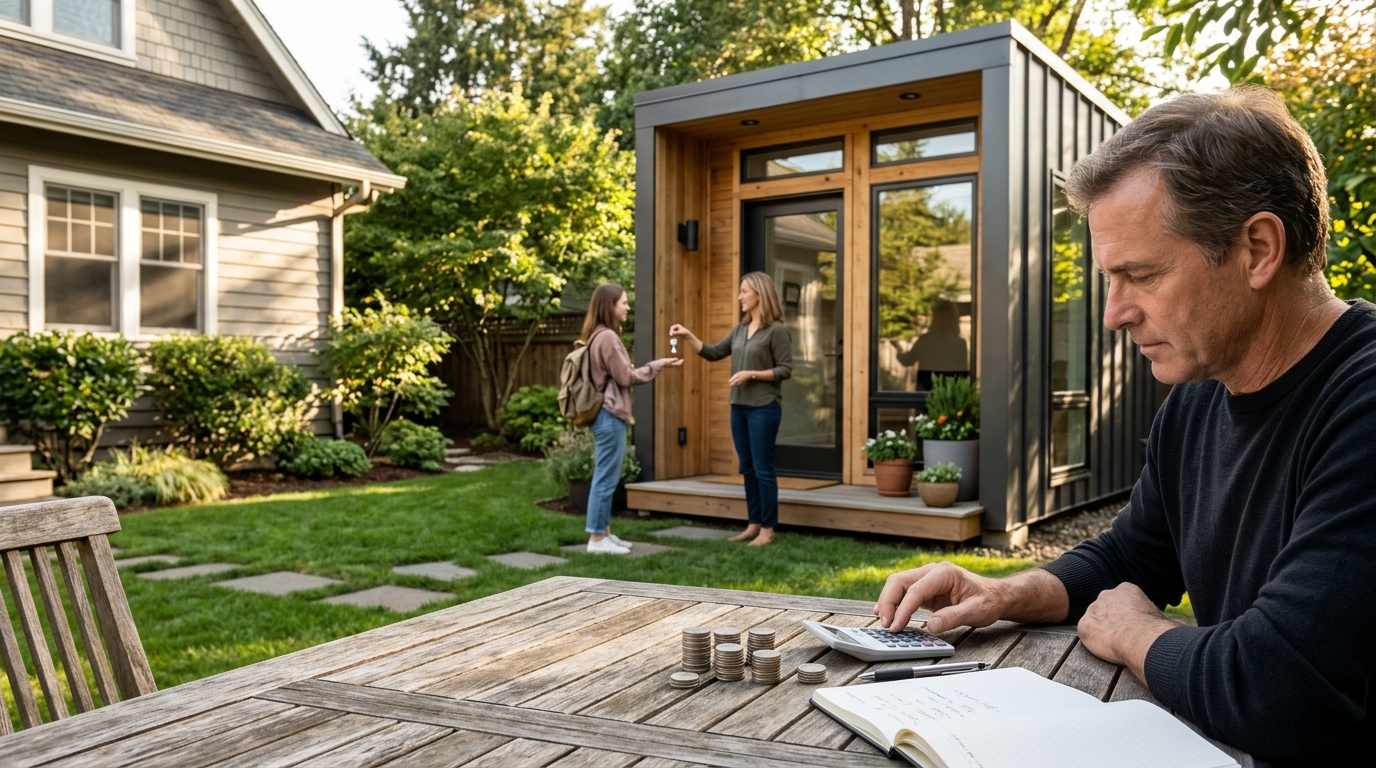
Calculate ADU rental ROI by estimating annual rent, subtracting vacancy and operating expenses to find net operating income, subtracting loan payments to find pre-tax cash flow, and comparing that cash flow with the cash you invested. Keep each measure separate: a high gross yield does not necessarily mean strong monthly cash flow or a quick payback.
A 2020 listing survey reported a $1,600 median asking rent. Treat that figure only as a dated regional reference: asking rents are not signed leases, and the listing survey is not the same as the statewide construction-cost survey. Compare nearby units that match your ADU’s location, size, condition, privacy, and amenities, and use actual lease evidence where available.
Build a worksheet with your project budget, rent evidence, expense estimates, and financing terms. Then calculate the measures in sequence:
- Set total project cost. Enter the full cost of your project, including design, permitting, construction, site work, and other costs needed to complete the rental unit. Use your bids and project-specific estimates rather than treating a statewide benchmark as your budget.
- Calculate gross annual rent and gross yield. Multiply the monthly rent assumption by 12 to get gross annual rent. Divide gross annual rent by total project cost, then multiply by 100 to express the result as a percentage: gross yield = (monthly rent × 12 ÷ total project cost) × 100. Gross yield is a starting point for comparison, not profit, because it does not account for vacancy, operating costs, or debt.
- Estimate net operating income. Subtract expected vacancy and operating expenses from gross annual rent. Include costs such as maintenance, insurance, utilities you cover, property management, and property taxes. The result is net operating income (NOI), before loan payments and income taxes.
- Calculate cash flow after financing. Subtract annual loan payments from NOI to estimate annual pre-tax cash flow. Divide annual pre-tax cash flow by the cash you invest, including your down payment and any project costs you pay out of pocket, to calculate cash-on-cash return: cash-on-cash return = annual pre-tax cash flow ÷ cash invested. Keep your financing assumptions visible because a different loan amount, interest rate, or repayment schedule changes this result.
- Compare the result with payback and resale possibilities. When cash flow is positive, a simple payback estimate divides cash invested by annual pre-tax cash flow. Payback period is not rental yield: it estimates how long rental cash flow could take to equal your initial cash investment, without accounting for changes over time. Consider potential property appreciation separately, since future appreciation is not guaranteed and should not be counted as rental income.
Use conservative, expected, and stronger-rent cases to show how sensitive the result is to your assumptions. In the conservative case, use lower rent supported by comparable listings or leases, allow for more vacancy, and include higher plausible operating costs. In the expected case, use the rent and expenses best supported by your local evidence and bids. In the stronger-rent case, use a higher rent only when comparable units support it. Do not improve the result simply by assuming away vacancy or costs. Keep total project cost and financing terms consistent across cases unless you have a clear reason to change them.
This comparison helps you identify which assumptions drive the investment decision. If the expected case produces limited cash flow, test whether a lower-cost design, different financing, or better-supported rent evidence changes the outcome before treating a stronger scenario as the likely return.
What Rent Can Your ADU Earn?
Estimate your ADU’s achievable rent using nearby comparable rentals, adjusted for the unit’s size, layout, access, privacy, condition, and rental terms. A regional average can provide context, but it cannot tell you what a tenant is likely to pay for the specific unit you plan to build.
A 2020 survey of 150 Southern California ADU listings found asking rents from $650 to $4,800 per month, a median asking rent of $1,600, and a median unit size of 500 square feet. These are 2020 asking-rent observations, not current guaranteed rents or records of signed leases. Use the figures as historical context, not as your rent assumption.
Look for local listings that resemble your planned ADU in location, floor area, bedroom and bathroom arrangement, and overall condition. Compare what each rental includes, such as utilities, parking, laundry, outdoor space, furnishings, and internet access. Asking prices show what landlords hope to receive. Where possible, validate your estimate with reliable information about actual rents and the terms tenants accepted.
A compact unit can appeal to renters when its layout makes daily routines practical. A dedicated entrance can help separate the ADU from the main home, while a functional kitchen and bathroom, useful storage, and natural light can make the space more comfortable. Privacy also matters: sightlines, noise, shared outdoor areas, and the path to the entrance can affect how independent the unit feels. These features can strengthen tenant appeal, but they do not guarantee a particular rent premium.
Match comparable units to the rental strategy you expect to use. Long-term rentals are generally offered unfurnished or partly furnished and require you to plan for lease administration, maintenance, and periods between tenants. Furnished rentals may require you to provide and maintain furniture, appliances, and household items. Short-term rentals can involve more frequent guest communication, cleaning, and turnover. These different demands affect your ROI assumptions, so do not compare a furnished nightly listing directly with an unfurnished long-term rental.
Check local rules before assuming a rental term is permitted. California jurisdictions may require ADU and JADU rentals to be for terms longer than 30 days, so a short-term strategy may not be available for your property. Build your rent estimate around the unit’s actual configuration and the rental terms you can lawfully offer, rather than relying on a higher-priced listing with a different setup.
How Much Does an ADU Cost to Build?
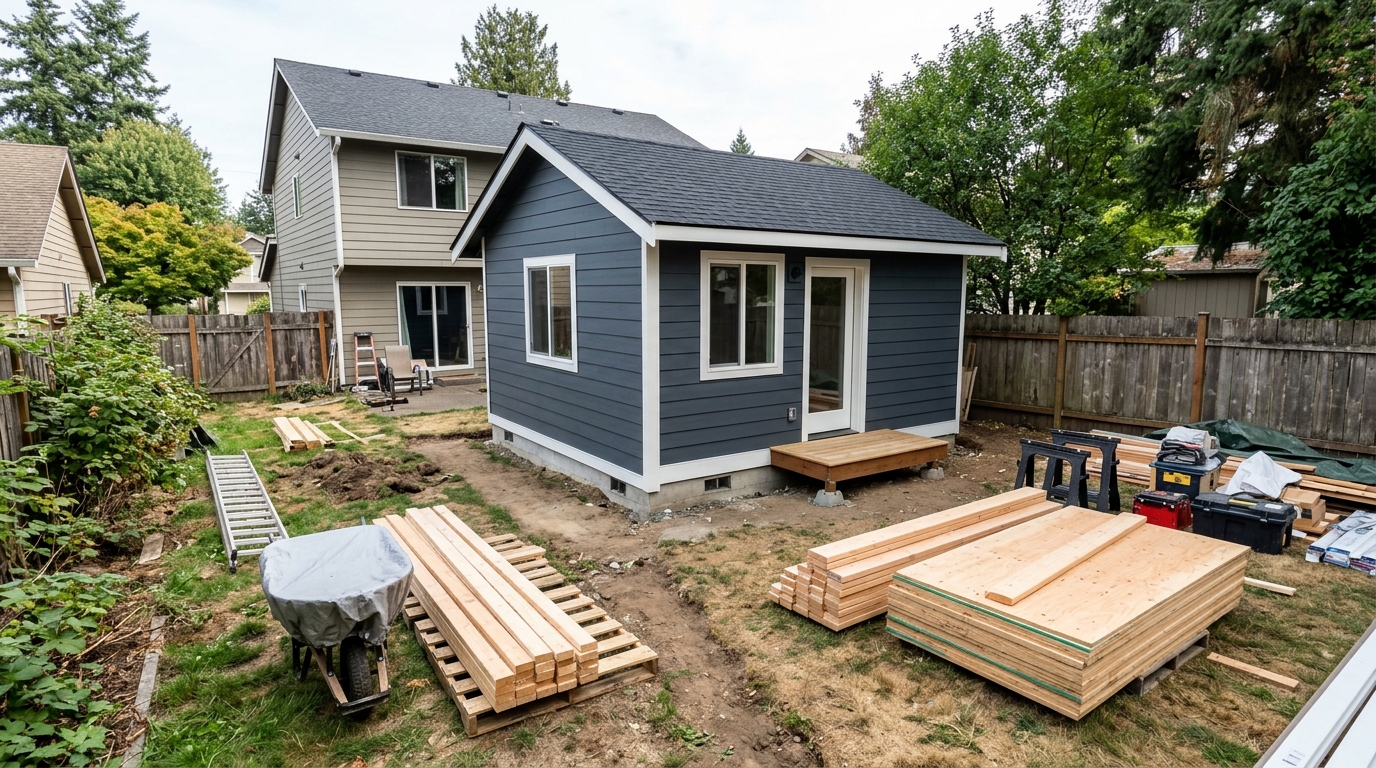
An ADU’s total build cost depends on the property’s existing conditions, the unit type and scope, local requirements, and financing. A statewide median cannot serve as a reliable budget for a specific site. The statewide 2020 median construction cost was $150,000, but Oakland’s published estimates show how sharply costs can differ by project type: the City of Oakland estimates $200–$300 per square foot to convert existing living space and $300–$500 per square foot for a new detached or prefabricated ADU. Those Oakland figures are local examples, not Los Angeles-area price quotes.
A garage conversion may cost less than building a separate unit when the structure is sound and already has suitable access or utility connections. But an existing garage may need substantial changes to meet the requirements for an independent dwelling. An attached ADU can share a wall with the main home, while a detached unit may require more site preparation, foundation work, and separate utility connections. The condition of the property and the work required matter as much as the unit label.
Do not multiply a square-foot estimate by the planned area and treat the result as your complete project budget. Include design, permitting, site preparation, utility connections, construction, and financing costs. Depending on the site and project scope, plans may also need revisions or additional work before construction can proceed. Your cost estimate should account for the work needed to deliver a usable, permitted rental unit, not just the structure itself.
California’s impact-fee rules can also affect your budget. ADUs with 750 square feet or less of interior livable space are exempt from local-agency, special-district, and water-corporation impact fees. Larger units may be charged fees in proportion to the primary dwelling’s size, and school districts may levy fees on ADUs larger than 500 square feet. Check how the rules apply to your proposed unit and jurisdiction when estimating fees. Do not assume every project will have the same charges.
In your ROI calculation, use the full project budget rather than construction cost alone. A higher total cost means more capital to recover from rental income and can reduce gross yield when expected rent stays the same. Financing costs also affect cash-on-cash return because loan payments reduce the income left after operating expenses. For a proposed 600-square-foot ADU in Los Angeles, you need property-specific design, site, utility, permitting, and fee information before estimating cost. Published per-square-foot ranges from another city cannot establish that project’s price.
All County Development manages projects from initial design and permitting through final construction, helping you keep the project scope and its cost components connected. With over 20 years of experience serving the Los Angeles area, the company’s work includes home additions and garage conversions for ADUs. For your investment model, keep each budget category visible so you can update the projected return as plans, site requirements, and financing details become clearer.
Which Costs and Rules Change Net Returns?
Net ADU rental returns depend on vacancy, operating expenses, financing, project timing, and local rental rules. Treat gross rent as potential income rather than profit. A useful estimate accounts for every cost between completing the unit and collecting rent, along with the time and conditions required to make renting feasible.
Use this expense checklist in your worksheet:
Vacancy: Allow for time without a tenant between leases or while you find a renter. A unit that is not occupied produces no rent, even as some costs continue. Repairs and maintenance: Budget for routine upkeep and repairs to the unit, appliances, and systems. The unit’s age, condition, and included features affect what you may need to maintain. Insurance: Confirm how adding a rental unit could affect your property coverage and include the relevant premium in your estimate. Property taxes: Account for property taxes in your ownership costs and check how your local assessor treats the completed project. Owner-paid utilities: Include any water, electricity, gas, trash, or other services you expect to cover. Separate metering and lease terms can affect which bills remain yours. Management: Include the cost of professional management if you do not plan to handle tenant communication, rent collection, and lease administration yourself. Financing: Enter loan payments and other borrowing costs separately from operating expenses. Loan terms, the amount borrowed, and the timing of draws affect cash flow and the cash you must contribute. Local fees: Check for applicable permit, inspection, utility, and other jurisdiction-specific charges. California exempts ADUs with 750 square feet or less of interior livable space from certain impact fees, but other charges may still apply.
Separate operating expenses from debt payments in your calculations. Operating expenses reduce net operating income; financing payments reduce the cash left after those expenses. A project can have positive operating income yet leave little cash flow after debt service, so test the actual loan terms rather than assuming rental income will cover the financing.
Permitting also affects when income can begin. Under California’s 2026 ADU rules, permitting agencies generally must approve or deny a completed ADU or JADU application within 60 days. That is a decision deadline for a completed application, not a promise that the entire project will be permitted, built, and ready to rent within that period.
The full timeline can be substantially longer. The Alameda County ADU Resource Center says permitting typically takes 1–6 months and most complete ADU projects take 12–18 months, with some extending to 24 months or more. Design development, application preparation, correction cycles, construction, and final readiness all affect the schedule. If your project takes longer than expected, rent begins later while financing and other carrying costs may continue. Model a realistic start date for income instead of treating the legal review deadline as a completion date.
Underwriting rules can affect whether projected rent helps you qualify for financing, but they do not make rent guaranteed cash flow. In its October 8, 2025 policy announcement, Fannie Mae allowed income from one existing ADU to count toward qualifying income for specified purchase and limited cash-out refinance loans on a one-unit principal residence, capped at 30% of total qualifying income. The policy applies to specified loans and an existing ADU. Do not assume a planned unit’s future rent will qualify under the same terms. Ask your lender how the policy applies to your loan and documentation.
Local rental requirements can also change your income model. California local agencies may require ADU and JADU rentals to be for terms longer than 30 days, so verify the rules in your jurisdiction before building a short-term rental forecast. Lease terms, utility responsibilities, and permitted use should match the rental plan you actually expect to operate.
Include lender requirements, project timing, and local rules in your feasibility review alongside your expense checklist. A careful review can reveal whether the financing works before rent starts, whether the intended rental term is allowed, and how delayed completion affects projected returns. All County Development manages ADU projects from design and permitting through construction, helping you keep scope, approvals, and build planning connected as the project moves toward rental readiness.
How Can You Improve Your ADU’s Long-Term ROI?
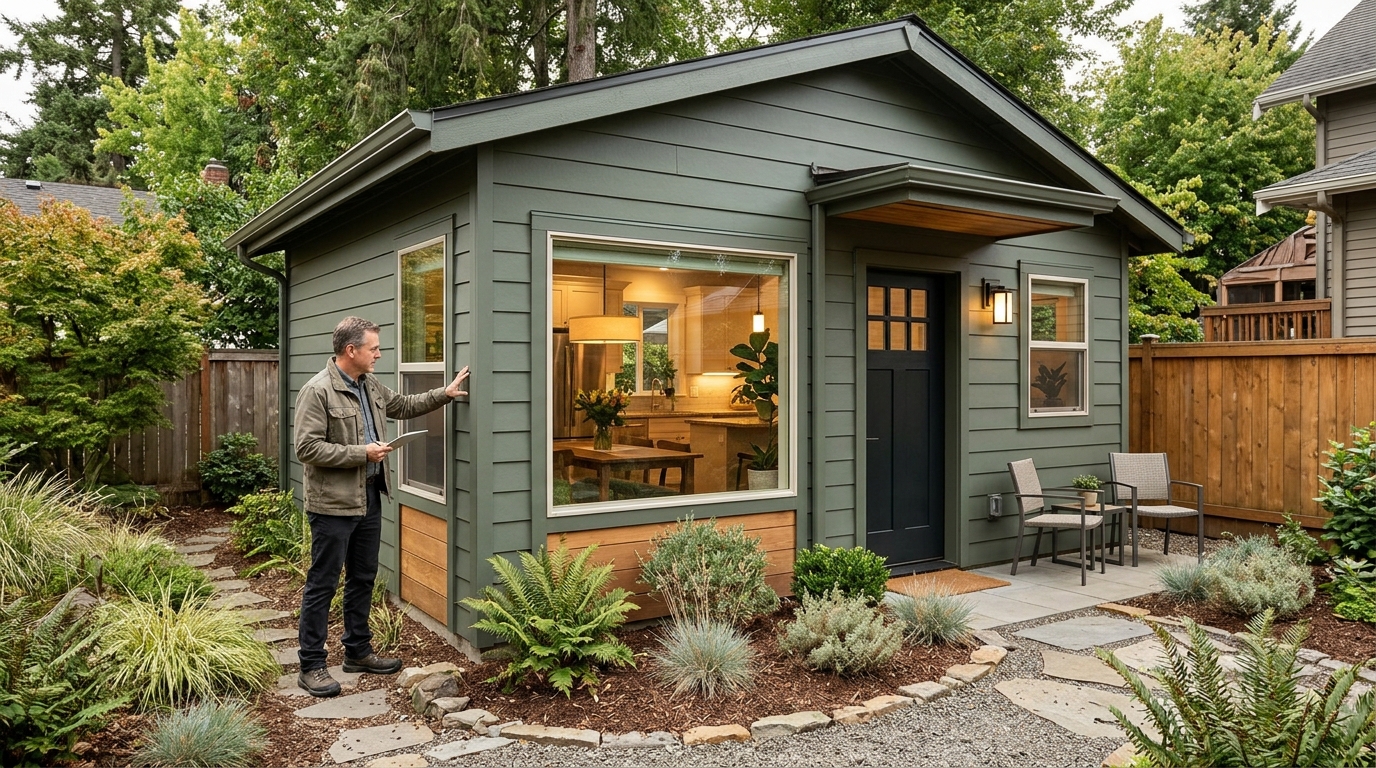
You can improve your ADU’s long-term ROI by choosing a unit type, layout, and finish level that fit both your property and the renters you expect to serve. Compare a conversion, an attached ADU, and a detached unit before settling on a design. The best fit depends on existing structures, available space, utility access, privacy, and rental demand around your property.
Start with the likely tenant profile. A single renter may value a compact, well-organized layout with a comfortable work area, while a small household may need separate sleeping space and more storage. Those needs can guide choices such as the number of rooms, kitchen configuration, laundry provisions, and entrance location. Use nearby rentals to understand which features are relevant to your market, rather than adding space or amenities without a clear purpose.
Efficient planning can balance rental functionality with build cost. A thoughtful floor plan can make circulation, storage, and daily routines work well without adding unnecessary area or complexity. For example, placing plumbing fixtures near one another may simplify the layout, while a dedicated entrance can help the unit feel independent. Neither choice guarantees a particular saving or rent increase. The goal is to prioritize features that support usability and tenant appeal within a cost-conscious scope.
Review feasibility before plans become difficult to change. Check the condition of any garage or other structure you may convert, the space available for a new unit, and the work needed to connect utilities. Consider construction access, the route a tenant would use to reach the unit, sightlines between the ADU and main home, and how outdoor areas may be shared. Identify permitting requirements and local rental rules early, including any limits on the rental terms you intend to offer. Addressing questions at the start can reduce avoidable redesigns, delays, and scope changes.
All County Development is a custom home builder and remodeling contractor with more than 20 years of experience serving Los Angeles, including Tarzana, Beverly Hills, and Santa Monica. The company’s relevant work includes home additions and garage conversions for ADUs. Because the team manages each project phase from initial design and permitting through final construction, it can coordinate design decisions, approvals, and building work as the scope develops.
Protect the qualities that help a unit remain appealing over time. Durable, maintainable finishes, practical storage, good lighting, and a layout that is easy to furnish can support everyday use. Keep your intended renter in view when selecting materials and features: a high-maintenance finish or elaborate amenity may add cost without improving the unit’s usefulness for your target market. Functional planning is not the same as choosing the cheapest option. It means directing the budget toward work that supports comfort, durability, and rental readiness.
Before committing to the build, compare the proposed scope with your rent assumptions and financing plan. If a desired feature adds substantial cost, ask whether it addresses a specific tenant need or site constraint. Coordinated project delivery and value-driven design can help you make a more informed investment decision, but no design or construction process can promise a particular rental return.
Turn Your ADU Numbers Into a Build Plan
Before requesting a design, prepare a one-page feasibility brief for your property. Include the address, whether you are considering a garage conversion, attached ADU, or detached unit, approximate usable area, known utility locations, and any access or privacy constraints. Add local rent comparables, your current project-cost estimate, proposed financing terms, monthly operating-cost allowance, and intended lease length. Mark each item as confirmed, estimated, or unknown so you can see which assumptions still need answers.
If your property is in Los Angeles, Tarzana, Beverly Hills, Santa Monica, or nearby, bring that brief to All County Development for a property-specific conversation about scope and feasibility. With over 20 years of experience, we manage ADU projects from initial design and permitting through final construction, including garage conversions. That coordination helps connect your proposed unit and site conditions to the work required to make the space rental-ready.
Ask us to review the likely project path, identify details that could affect the scope, and clarify what information is needed to refine your cost assumptions. If the property is a garage conversion, note its condition and any known utility connections. If you are considering a detached unit, identify the proposed location and construction access. Bring your rent and financing assumptions too, so the discussion starts with your investment goals, not just a floor plan.
Frequently Asked Questions
1. What is the 7% rule in real estate, and does it apply to ADUs?
A gross-rent screening rule compares a property’s annual gross rent with its purchase price. For an ADU, compare expected rent with the ADU’s full project cost as a starting point, then assess vacancy, operating expenses, financing, and cash flow before judging the investment.
2. What states allow ADUs for rent?
ADU rental rules depend on state law and local ordinances, so check the requirements for your specific property. In California, local agencies may require ADU rentals to be for terms longer than 30 days.