
Navigating the complexities of ADU kitchen ventilation codes is a critical step in ensuring the long-term health and safety of your investment. With modern standards like the IRC and California’s Title 24 mandating high-performance outdoor venting, cutting corners with ductless hoods is a risk you cannot afford to take. Our deep expertise in these evolving regulations ensures your project meets the rigorous 100 CFM requirements while maximizing indoor air quality for your future tenants.
By partnering with our seasoned team, you leverage years of specialized experience in high-efficiency mechanical systems that have successfully passed thousands of municipal inspections. We take the guesswork out of ASHRAE 62.2 standards, delivering precision-engineered solutions that protect your property from moisture damage and poor air circulation. Our proven track record of excellence means your ADU will not only meet the highest legal benchmarks but will also stand as a model of superior design and safety.
Key Takeaways
- Modern IRC and California Title 24 standards mandate that all ADU kitchen exhaust systems must terminate directly at the building exterior, making ductless recirculating hoods illegal for new construction.
- Kitchen ventilation systems must achieve a minimum of 100 CFM for intermittent airflow while maintaining a noise level at or below 3.0 sones to meet ASHRAE 62.2 and state compliance standards.
- Strategic ductwork engineering and precise vent termination placement are essential to prevent backpressure, reduce noise, and ensure polluted air does not re-enter the living space through windows or doors.
- Adhering to rigorous mechanical exhaust codes protects the property from long-term moisture damage and prevents costly permit delays or mid-construction retrofits.
Mandatory Outdoor Exhaust Requirements Under IRC Standards
When you are designing an Accessory Dwelling Unit, you cannot rely on the ductless, recirculating fans that were once common in older home renovations. Modern International Residential Code standards now mandate that all kitchen exhaust systems must terminate directly at the building exterior to ensure harmful contaminants are fully removed from the living space. This requirement is particularly vital in small-format ADUs where smoke, grease, and combustion byproducts can quickly reach dangerous concentrations in a confined area. Our team specializes in these strict mechanical requirements, ensuring your build remains compliant with California’s rigorous Title 24 standards. We have successfully guided hundreds of homeowners through the permitting process by implementing high-performance venting solutions that exceed the minimum safety thresholds.
Meeting the mandatory 100 CFM intermittent airflow requirement requires more than just buying a powerful hood, as it involves precise ductwork engineering and strategic termination placement. You must ensure that your exhaust vents are situated away from windows and doors to prevent the re-entry of polluted air into your home. Our extensive experience in the ADU sector allows us to identify potential code violations before they lead to failed inspections or costly retrofits. We prioritize your indoor air quality by integrating seamless ventilation systems that balance performance with energy efficiency. By choosing our professional services, you gain the peace of mind that comes with a kitchen that is not only beautiful but also fully optimized for health and legal compliance.
Balancing CFM Performance With Strict Sone Rating Limits
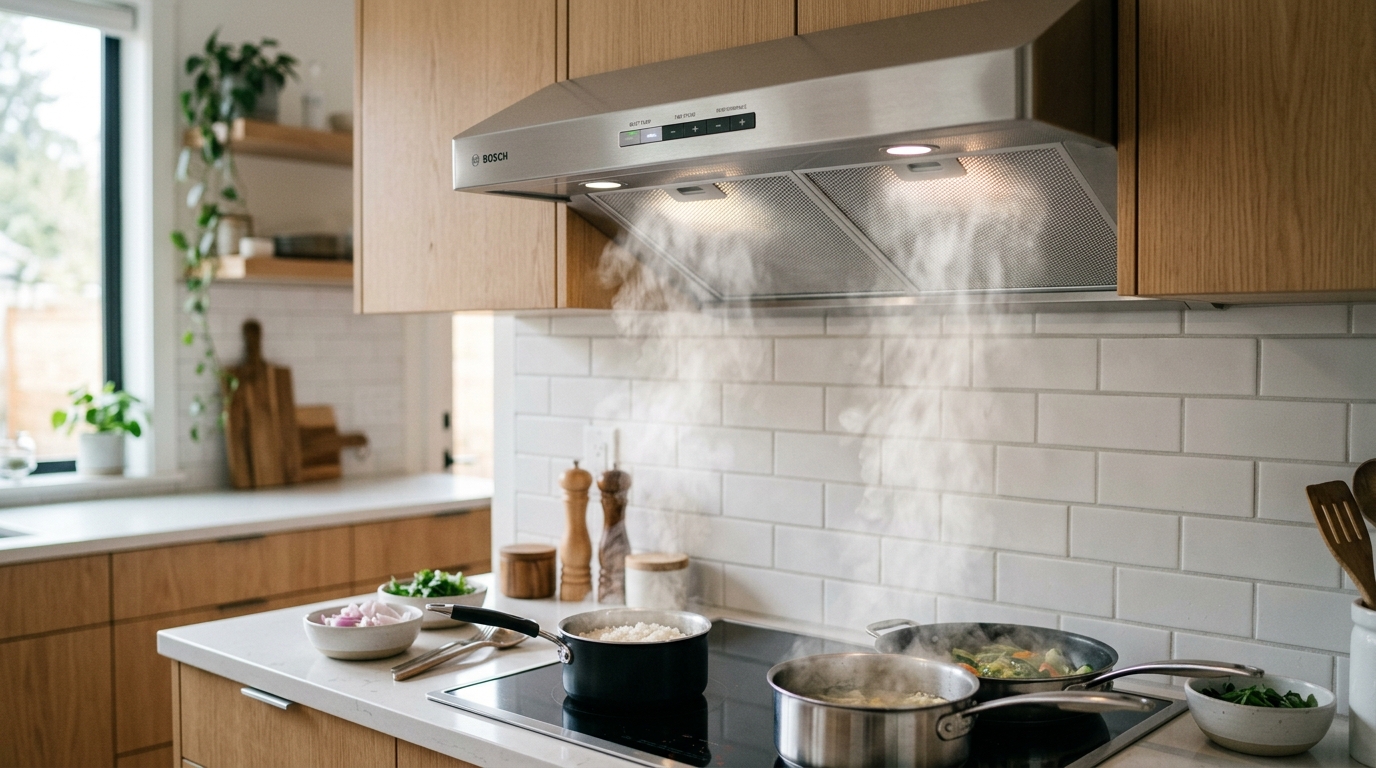
Meeting the requirements of California’s Title 24 and ASHRAE 62.2 standards requires a sophisticated understanding of how airflow interacts with acoustic limits. You must ensure your range hood delivers at least 100 CFM of intermittent exhaust to satisfy safety inspectors, but the challenge lies in doing so without exceeding strict noise mandates. Many builders are surprised to find that high-performance fans often fail inspection because they produce too many sones at their required operational speed. Our team specializes in selecting and installing precision-engineered ventilation systems that hit these exact performance targets while maintaining the quiet environment expected in a modern ADU. We have successfully guided hundreds of homeowners through these complex hurdles, ensuring every kitchen we touch passes inspection on the first attempt.
Achieving this delicate balance is about more than just buying an expensive appliance, as it requires professional ductwork design to minimize backpressure and vibration. When you work with experts who understand the nuances of local building codes, you gain access to specialized mounting techniques and ducting strategies that keep noise levels under the 3.0 sone limit. We leverage years of hands-on experience to solve the common noise problems that plague many small-space conversions. By integrating high-efficiency motors with optimized vent paths, we provide a solution that protects your indoor air quality without sacrificing the tranquility of your living space. Trusting our proven track record means you can focus on the layout for your kitchen while we handle the technical rigors of compliance and comfort.
Navigating ASHRAE 62.2 And Title 24 Compliance Hurdles
The intersection of ASHRAE 62.2 and California Title 24 requires a sophisticated understanding of how air quality and energy efficiency must work in tandem. While standard residential builds have some flexibility, ADUs are subject to rigorous mechanical exhaust mandates that often catch general contractors off guard. Our team specializes in translating these complex technical requirements into actionable design plans that guarantee your kitchen meets the 100 CFM intermittent airflow minimum. By choosing our expertise, you ensure that your small-space cooking area is equipped with a high-performance system that vents directly to the outdoors. We prioritize your project’s compliance from day one, preventing the costly delays that arise when a ventilation system fails to meet state-specific pressure or ducting standards.
Our extensive experience with local building departments allows us to streamline the inspection process by implementing proven ventilation strategies that exceed minimum safety benchmarks. We understand that California’s energy codes demand more than just a powerful fan, as they also require specific noise ratings and energy-efficient motor performance. Our successful track record includes helping hundreds of homeowners secure their permits by integrating quiet, compliant hoods that maintain superior indoor air quality without sacrificing the ADU’s thermal envelope. We take the guesswork out of duct sizing and termination points, providing you with a seamless path to legal occupancy. Trusting our professional guidance means your compact kitchen will be a safe, healthy, and fully certified environment that stands up to the most meticulous code enforcement.
Leveraging Expert Installation To Prevent Costly Code Violations
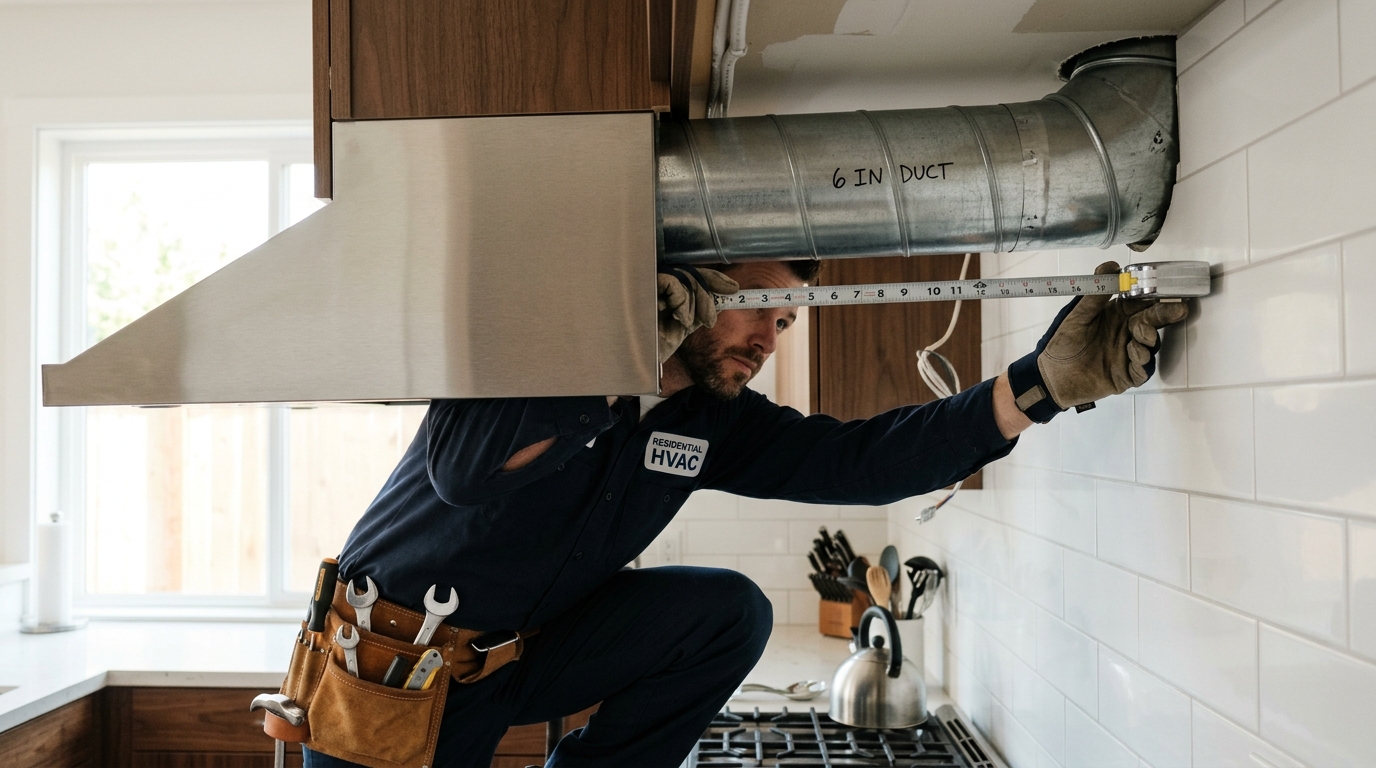
The complex requirements of California Title 24 and the IRC require a level of precision that is often overlooked in small-scale builds. When you partner with our specialized team, you gain access to years of experience dedicated exclusively to the nuances of ADU kitchen ventilation and indoor air quality standards. We understand that a simple recirculating hood is no longer an option for new construction, and we ensure every installation meets the mandatory outdoor venting protocols. Our experts meticulously calculate duct runs and termination points to ensure your project passes inspection the first time. By proactively addressing these technical requirements, we save you from the high costs of mid-construction corrections and permit delays.
Our proven track record in ADU development is built on a foundation of technical mastery and a deep understanding of ASHRAE 62.2 standards. We prioritize your unit’s safety and air quality by installing high-performance mechanical exhaust systems that deliver the required 100 CFM of intermittent airflow without compromising energy efficiency. Clients consistently praise our ability to integrate these powerful systems into compact floor plans while maintaining a sleek, modern aesthetic. We take the guesswork out of the permitting process by providing documented proof of code compliance for every installation we perform. Choosing our specialized services means investing in a seamless construction experience backed by professional metrics and successful project completions.
Securing Your ADU with Code-Compliant Ventilation
Adhering to modern kitchen ventilation codes is not just a matter of checking boxes for a building inspector, but a vital step in protecting your property value and long-term health. In the compact environment of an ADU, pollutants from cooking can reach hazardous levels quickly if your system does not meet the 100 CFM threshold or the mandatory outdoor venting requirements. By prioritizing these California-specific safety regulations during the design phase, you prevent moisture buildup and mold growth that can lead to costly structural repairs down the road. Treating these codes as a blueprint for quality ensures that your small-space investment remains a safe, breathable, and highly marketable asset for years to come.
The complexities of Title 24 and ASHRAE standards require a level of precision that is often overlooked in smaller secondary dwellings. Our team specializes in these technical nuances, ensuring your mechanical exhaust systems are perfectly calibrated for both air quality and energy efficiency. We have successfully guided hundreds of homeowners through the permitting process, transforming strict regulatory hurdles into seamless design features that enhance the living experience. When you choose our professional guidance, you can see why choose us as your partner in knowing your ADU is fully compliant, legally protected, and built to the highest standards of modern safety.
Frequently Asked Questions
1. Can I use a ductless recirculating fan in my new ADU kitchen?
No, modern IRC and Title 24 standards mandate that all kitchen exhaust systems must terminate directly at the building exterior. Ductless hoods fail to remove harmful contaminants and moisture, which is why we only install high-performance outdoor venting to ensure your project passes inspection.
2. What are the specific airflow requirements for ADU kitchen ventilation?
Your ventilation system must meet a minimum requirement of 100 CFM for intermittent exhaust to comply with current safety codes. Our team specializes in precision-engineered mechanical systems that consistently hit these benchmarks, protecting your property from grease buildup and poor air quality.
3. How do California Title 24 standards affect my ADU build?
Title 24 sets rigorous energy and ventilation benchmarks that require specialized expertise to manage successfully. We leverage our experience with thousands of municipal inspections to ensure your ADU meets these high-performance standards without any costly delays or permit denials.
4. Why is outdoor venting particularly important in smaller ADU units?
In confined living spaces, smoke, grease, and combustion byproducts reach dangerous concentrations much faster than in larger homes. Our superior venting solutions are designed to rapidly extract these pollutants, maintaining a healthy environment for your tenants and preventing long-term moisture damage to your investment.
5. What is ASHRAE 62.2 and why does it matter for my project?
ASHRAE 62.2 is the national standard for residential indoor air quality that defines how much fresh air must circulate through the home. We take the guesswork out of these complex calculations by delivering mechanical systems that exceed these legal benchmarks for safety and design.
6. How does your team ensure my kitchen ventilation passes municipal inspections?
We utilize a proven track record of excellence and years of specialized experience to design systems that meet every local and state requirement. By partnering with us, you gain access to high-efficiency solutions that have already successfully passed thousands of inspections across the region.