
Building an accessory dwelling unit is a visionary investment, but the hidden complexities of adu utility connections can quickly turn a dream project into a logistical headache. You deserve a seamless transition from blueprint to backyard home without the sting of unexpected trenching fees or capacity upgrades. Leveraging deep expertise in modern legislative shifts and infrastructure requirements ensures your project remains on budget and fully compliant.
A proven track record of successful installations means you can bypass the confusion of shared lines versus separate meters with confidence. Professional utility specialists have saved homeowners thousands by identifying the most efficient configurations and navigating the bureaucratic red tape of utility providers. By choosing specialized services, you are prioritizing precision, transparency, and a high-functioning secondary suite that adds immediate, measurable value to your property.
Key Takeaways
- Choosing between shared tie-ins, submetering, or separate meters is a critical decision that balances upfront construction costs against long-term property management and tenant billing autonomy.
- Most ADU projects require a main electrical panel upgrade to 200 amps or more and a CCTV sewer lateral inspection to ensure existing infrastructure can safely handle the increased utility load.
- Strategic utility mapping and expert navigation of recent legislative shifts can save homeowners thousands of dollars by avoiding unnecessary trenching fees and inflated capacity charges.
- Professional oversight of utility configurations ensures full compliance with local building codes while transforming the ADU into a high-value, functional asset with predictable infrastructure costs.
Comparing Shared Tie-ins Versus Separate Utility Meters
Deciding how to power and plumb your ADU is a pivotal technical choice that dictates both your upfront construction budget and your long term property management style. A shared tie-in is often the most cost effective path forward, as it allows you to tap directly into your main home’s existing infrastructure without the need for extensive trenching or new street connections. While this approach minimizes initial expenses, it means you will receive a single consolidated bill for both units, requiring you to either include utilities in the rent or estimate usage. Experts specialize in evaluating your current panel capacity and pipe diameter to ensure a shared connection can handle the increased load without sacrificing performance.
If you prefer precise data without the high cost of a dedicated utility account, submetering offers a professional middle ground for savvy property owners. By installing private meters on the ADU lines, you can accurately track exactly how much energy and water your tenants consume while the utility company continues to issue a single primary bill. This configuration empowers you to bill tenants fairly based on their actual footprint, which reduces disputes and encourages resource conservation. These systems have been successfully implemented across numerous projects, providing homeowners with the technical clarity needed to manage secondary dwellings like a streamlined business.
For those seeking complete operational independence, installing separate utility meters is the gold standard for maximizing property value and minimizing personal liability. Dedicated meters allow the utility provider to bill the tenant directly, removing you from the equation entirely and ensuring that any unpaid balances do not fall on your shoulders. While the initial permitting and installation for new meters can be more complex, deep expertise in navigating local building codes and utility requirements simplifies the process for you. Professional teams handle the logistical hurdles of site inspections and technical specifications, ensuring your ADU is a fully autonomous asset that stands ready for long term success.
Managing Trenching Logistics And Main Panel Upgrades
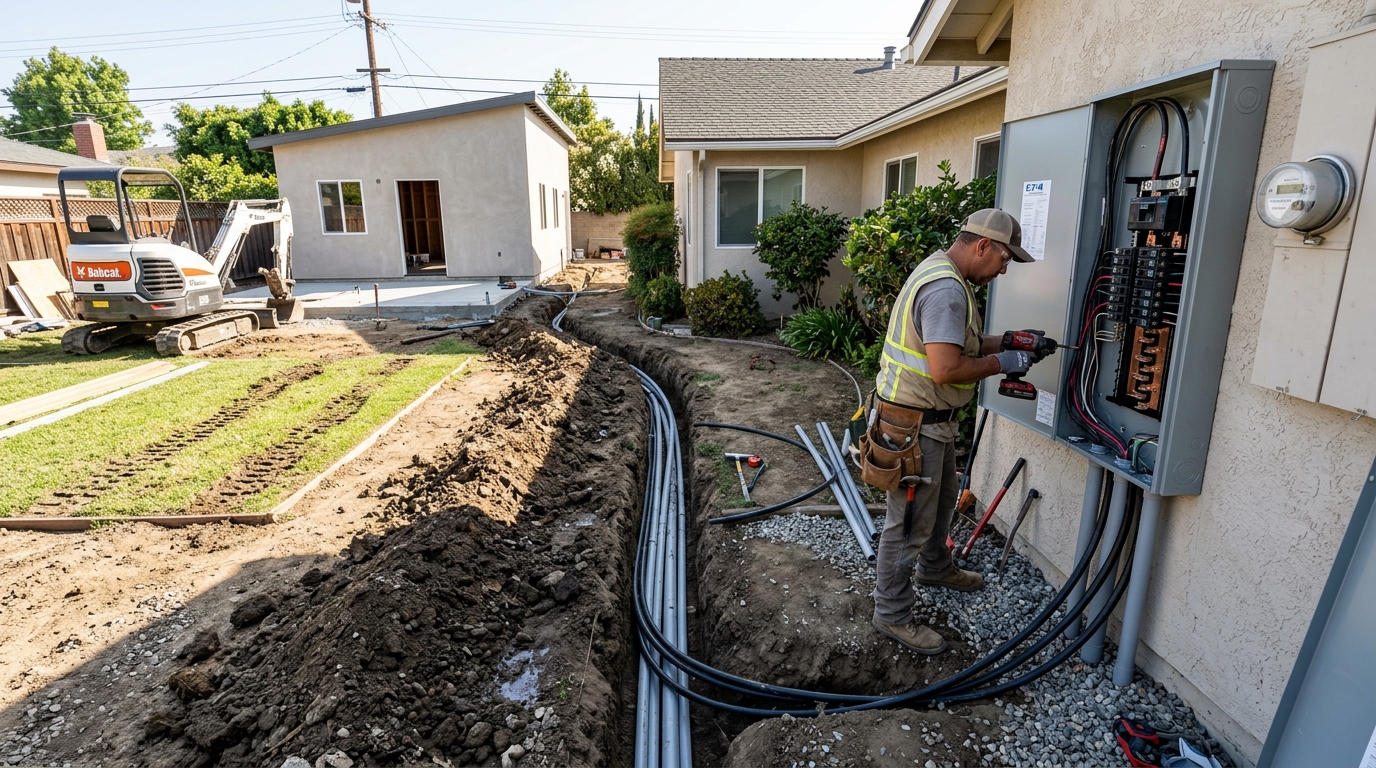
Navigating the physical demands of trenching requires a strategic approach to site excavation that minimizes disruption to your existing garden or yard. You must ensure that utility lines for water, sewer, and electricity are buried at the precise depths required by local building codes to ensure long term safety and functionality. Specialists map out the most efficient routes from the main house to your new dwelling, bypassing obstacles like mature trees or existing hardscaping. By leveraging technical expertise in site logistics, you can avoid the common pitfalls of improper drainage or utility interference. A clean and organized excavation process sets a solid foundation for your ADU infrastructure.
A critical component of your utility strategy involves assessing whether your current electrical system can handle the increased demand of a secondary unit. Most older homes require a main electrical panel upgrade to 200 amps or more to safely power modern appliances, HVAC systems, and lighting in an ADU. Comprehensive load calculations determine exactly how much capacity you need, preventing future circuit overloads and fire hazards. Experienced technicians handle the complex coordination with local utility providers to ensure your panel upgrade meets all current regulatory standards. Investing in this essential infrastructure early protects your property value and ensures a seamless power supply for your tenants.
Deciding between shared tie-ins and separate meters is a pivotal choice that affects your long term management of the property. While tapping into existing lines can reduce initial construction costs, separate meters offer the ultimate transparency for utility billing and tenant independence. A qualified adu contractor can guide you through these technical configurations by weighing the upfront investment against the convenience of automated billing and usage tracking. A successful track record in managing these installations helps reduce project anxiety by providing clear timelines and predictable outcomes. Professional oversight ensures that your utility connections are robust, compliant, and ready for immediate use.
Navigating Sewer Lateral Inspections And Capacity Fees
Navigating the complexities of sewer lateral inspections is a critical first step in ensuring your ADU project remains on schedule and within budget. Local jurisdictions often require a CCTV sewer lateral inspection of your existing sewer line to verify it can handle the additional load of a secondary dwelling. Experts specialize in identifying potential bottlenecks or structural issues early, preventing costly emergency repairs during the construction phase. By leveraging a deep understanding of municipal codes, you can clear these regulatory hurdles with confidence and precision. Hundreds of homeowners have successfully moved through this process, ensuring that every connection meets the highest standards of safety and compliance.
Recent legislative shifts have significantly increased transparency regarding capacity fees, which were once a major source of financial uncertainty for ADU developers. New regulations often limit the fees that utility providers can charge for secondary units, particularly those under a certain square footage. Experienced planners stay ahead of these shifting laws to ensure you never overpay for your utility tie-ins. Meticulous analysis of your site plan determines the cost of adding plumbing to your new structure, whether that involves a direct tie-in or a separate service line. A commitment to transparency and technical excellence ensures that your project moves forward without the anxiety of hidden costs or bureaucratic delays.
Streamline Your ADU Utility Tie-ins
Navigating the technical complexities of plumbing and electrical tie-ins requires a level of precision that only comes with years of hands-on experience. By partnering with a team of experts, you gain access to a proven track record of successful utility integrations that maximize efficiency while minimizing construction delays. Specialists identify the most cost-effective connection strategies for your specific lot, ensuring that your secondary dwelling meets all local codes and safety standards. A deep understanding of modern infrastructure transforms a potentially overwhelming logistical hurdle into a seamless part of your project timeline. This expertise provides clarity and confidence during every phase of the utility installation process.
Investing in professional guidance for your utility strategy is the most effective way to protect your long term property value and rental income potential. Understanding why choose us as your partner means you consistently benefit from a significant reduction in project anxiety because specialists handle the intricate coordination required for submetering and separate service lines. With hundreds of managed ADU connections, this expertise prevents the common pitfalls that often lead to expensive mid-construction changes. By securing professional services, you ensure that your ADU remains a high-value asset that is both functional and fully compliant with the latest legislative requirements. Technical mastery and strategic oversight bring your vision to life without the stress of unexpected utility complications.
Frequently Asked Questions
1. Should I choose a shared tie-in or a separate meter for my ADU?
Choosing a shared tie-in is often the most cost-effective path because it utilizes your main home’s existing infrastructure. If you prefer precise data for rental purposes without the high cost of a dedicated utility account, professional submeters can be installed to track usage accurately.
2. How do I know if my current electrical panel can handle an ADU?
Experts perform a detailed evaluation of your current panel capacity and pipe diameter to ensure your system can handle the increased load. Identifying necessary upgrades early prevents performance sacrifices or unexpected outages once your tenant moves in.
3. Will I have to pay for expensive street trenching for my utility lines?
Identifying the most efficient configurations helps you bypass the sting of unnecessary trenching fees. By leveraging deep expertise in infrastructure requirements, specialists often find ways to tap into existing lines that save you thousands of dollars in construction costs.
4. How do you help homeowners navigate the bureaucratic red tape of utility providers?
A proven track record and knowledge of modern legislative shifts allow specialists to manage the complex application and inspection processes for you. These services ensure your project remains fully compliant with local regulations while avoiding the common delays associated with utility company bureaucracy.
5. Can I charge my tenants for utilities if I use a shared connection?
Yes, you can either include a flat utility fee in the rent or install private submeters for more accurate billing. Technical precision in setting up these systems allows you to manage your property with confidence and transparency.
6. What are the benefits of hiring a specialist for ADU utility installations?
Hiring a specialized team ensures you receive a high-functioning secondary suite that adds immediate, measurable value to your property. Understanding your adu financing options and professional oversight provides a seamless transition from blueprint to backyard home by prioritizing precision and transparency throughout the entire installation process.