
ADU parking exemptions can determine whether your backyard housing project moves forward or faces costly delays and redesigns. Across the U.S., parking rules depend largely on state law and local zoning. California, Washington, and Oregon offer some of the broadest exemptions, but eligibility, distance-to-transit standards, and replacement-parking requirements vary significantly by jurisdiction.
You need more than a general rule of thumb to protect your project and avoid unnecessary parking costs. Understanding the applicable exemption before submitting plans can help you make informed decisions, control your budget, and maximize your property’s potential. With experienced, detail-focused guidance, you can address local requirements confidently and pursue a permitted ADU with fewer surprises.
Key Takeaways
- ADU parking exemptions vary by state and local jurisdiction, so eligibility depends on factors such as zoning, transit access, historic-district status, and whether the project converts existing space.
- California provides broad mandatory exemptions for qualifying ADUs, including units within one-half mile walking distance of public transit, units created through certain conversions, and some units in historic districts or permit-restricted areas.
- Washington and Oregon also provide meaningful parking relief, but transit definitions, distance standards, replacement-parking rules, and local requirements differ by jurisdiction.
- Confirm the exemption before finalizing plans or budgets, and document walking routes, zoning, transit access, existing parking, and site conditions; exemptions do not eliminate building, access, fire, utility, or other permitting requirements.
Introduction To ADU Parking Exemptions
Parking requirements may lead you to assume that an accessory dwelling unit (ADU) is impossible before you review the rules that actually apply. A small lot, limited driveway, or lack of space for a second vehicle may seem like an automatic obstacle. However, state law can limit when local governments may require ADU parking. California, Washington, and Oregon provide some of the most significant forms of statewide relief, although eligibility and protections vary by location. Understanding these exemptions early can help you avoid abandoning a project that may still be feasible.
The key is to distinguish statewide ADU parking exemptions from your city or county’s zoning requirements. In California, for example, certain ADUs may be exempt from parking standards. These include qualifying units near public transit, units created through conversions of existing space, and some units in designated areas or historic districts. Local rules may still affect access, building safety, replacement parking, and the approval process. An exemption does not mean every site requirement disappears. Reviewing state protections alongside local regulations gives you a clearer answer than relying on a general parking rule or informal assumption.
Before investing in plans or deciding that your property is ineligible, have the site evaluated under the rules governing your project. Experienced ADU guidance can help identify potential exemptions, distinguish mandatory state protections from local discretion, and uncover practical solutions for access and design constraints. This approach reduces surprises, strengthens your application, and helps you move forward with confidence when parking appears to be the biggest obstacle. A thorough analysis may show that your lot has more options than you initially believed.
California ADU Parking Exemption Eligibility
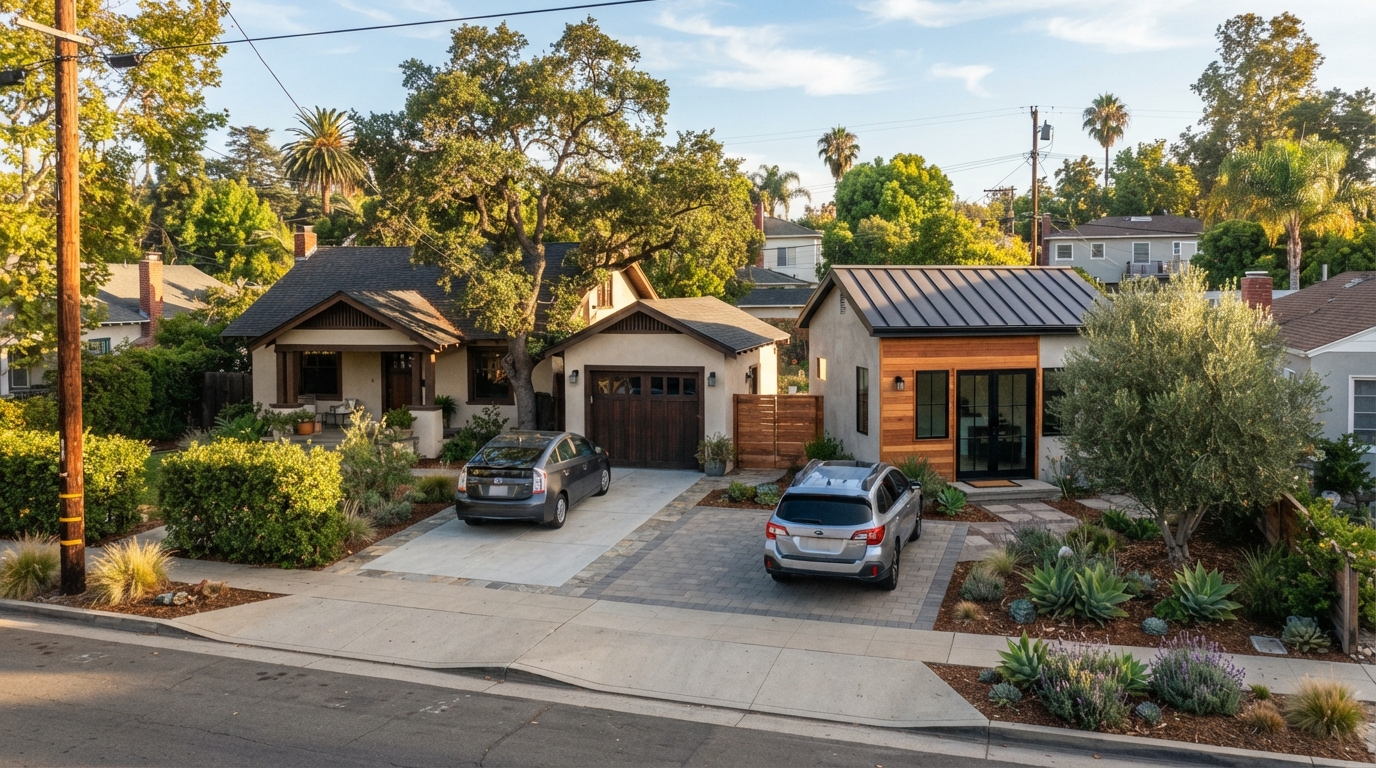
California’s ADU parking exemptions can remove one of the biggest obstacles to converting an existing space or building a new unit. A local agency generally cannot impose parking requirements when the ADU is within one-half mile walking distance of public transit, located in an architecturally and historically significant historic district, or contained within an existing or proposed primary residence or accessory structure. These protections can apply to garage conversions, interior additions, and detached units, depending on the project design and local review. Confirming eligibility early helps you avoid unnecessary site redesigns and keeps your application focused on the standards that apply.
Parking may also be exempt when the property is subject to a residential parking-permit program but the ADU occupant is not eligible to receive a permit, or when a car-share vehicle is located within one block of the ADU. These rules are especially valuable in dense neighborhoods where adding a driveway or replacement space could make your project impractical. Local agencies may still verify walking distance, transit availability, historic status, or car-share location, so your documentation should be accurate and complete. An experienced ADU review can identify the applicable exemption and address local questions before they create delays or unexpected costs.
You may submit an ADU application in connection with an application for new single-family or multifamily residential construction, although the new construction itself does not automatically eliminate every parking requirement. The ADU must still qualify under applicable state and local rules, and your plans should clearly show how the unit relates to the proposed residence or accessory structure. Reviewing the site plan, transit access, permit restrictions, and project timing together can reveal relief that is easy to miss when each issue is considered separately. With knowledgeable guidance, you can pursue a code-compliant ADU while reducing parking-related barriers and protecting the feasibility of your investment.
Washington And Oregon ADU Parking Relief
Washington and Oregon offer meaningful ADU parking relief, but eligibility depends on both state law and your local zoning code. In Washington, state requirements generally limit when local governments can require off-street parking, including for certain ADUs within walking distance of qualifying public transit. Local codes may still address lot conditions, street access, and replacement parking. Oregon also requires cities to allow ADUs in qualifying residential areas and provides transit-related parking relief in certain circumstances. These rules can help you overcome the assumption that a small lot automatically disqualifies your project.
The details matter before you rely on an exemption. Some jurisdictions may require replacement parking when an existing space is removed, while others limit or prohibit that requirement when the ADU qualifies for transit-based relief. Local definitions of a transit stop, walking distance, eligible property, and permitted ADU can affect the outcome. Code amendments may also change the analysis over time. A careful review of the current state statute and city or county code can identify available relief early, reduce redesign risk, and give you a clearer path to permitting your Washington or Oregon ADU.
You should verify the rules for your specific property before finalizing plans because state-level relief does not eliminate every local requirement. Pay particular attention to:
- Whether your property qualifies for a transit-related exemption;
- Whether the local code imposes replacement-parking or access conditions; and
- Whether your ADU design, permit status, and location satisfy all applicable eligibility standards.
Local ADU Parking Rules And Feasibility
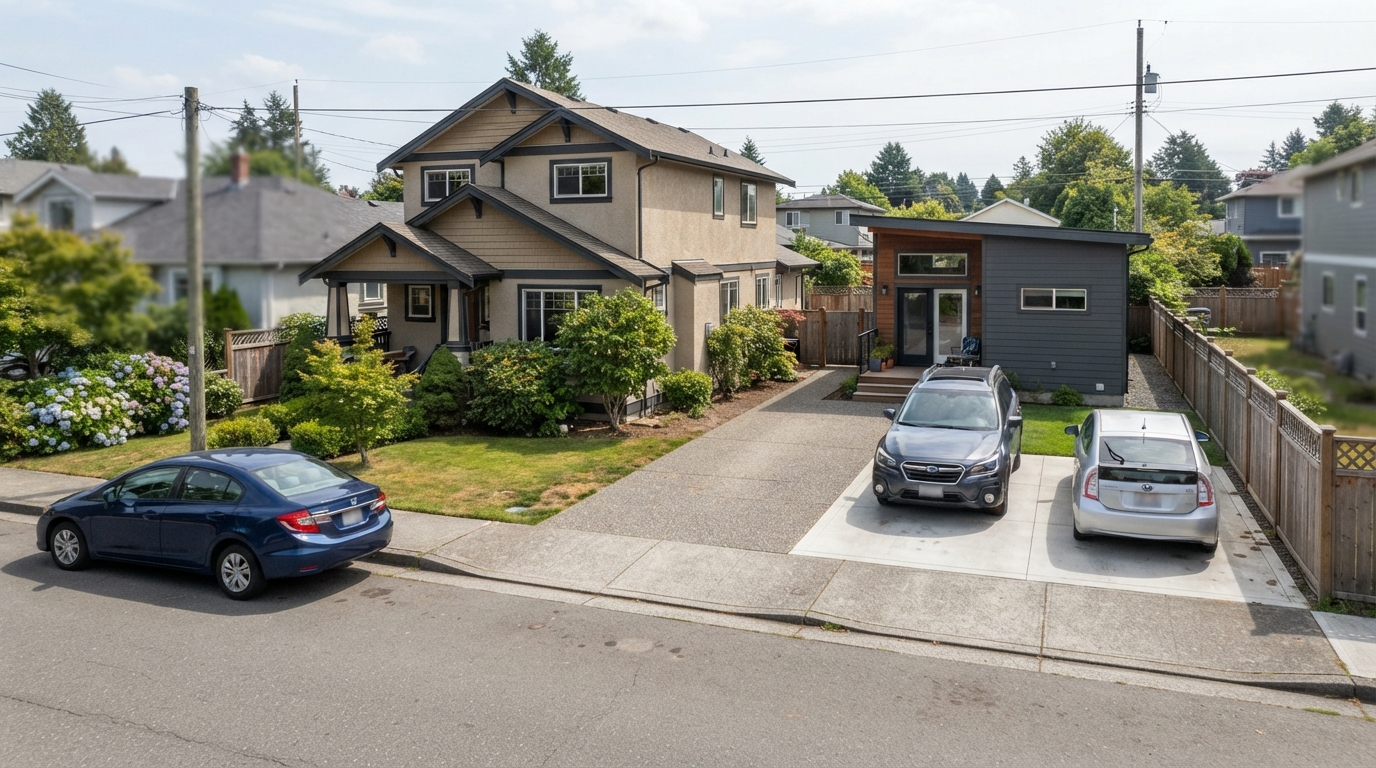
State-level ADU parking exemptions can remove a major barrier, but you still need to verify your city or county’s rules. Start by reviewing the zoning map for your parcel. Then compare the property’s zoning district, overlays, and applicable ADU ordinance with the state exemption categories. In California, for example, an ADU may qualify for parking relief based on its walking distance to public transit, but the measurement generally depends on the actual pedestrian route rather than a simple map radius. An experienced ADU professional can document the route, identify the relevant transit stop, and confirm whether local officials can impose replacement-parking requirements in your situation.
Your property’s historic-district status, neighborhood parking-permit rules, and existing site conditions can also affect feasibility and review. Check whether the lot is within an architecturally or historically significant district, whether the surrounding area uses preferential or restricted parking permits, and whether the project involves converting a garage, carport, or other required parking space. Your site plan should clearly show existing and proposed parking, access, covered structures, setbacks, and any replacement space that may be required or impractical. These details help distinguish a genuine state-law exemption from a project that remains subject to local parking or design standards.
A qualified ADU professional can assemble a support package that makes your exemption easier for the planning department to evaluate. The package may include zoning-map exhibits, measured walking-route diagrams, transit documentation, historic-district verification, parking-permit research, photographs, and a code-based explanation of why replacement parking does or does not apply. Presenting this information with a complete site plan can reduce back-and-forth, identify eligibility before you invest in design, and strengthen your application during plan check. The result is a clearer path to determining whether your lot is truly constrained or can benefit from available ADU parking exemptions.
Conclusion On ADU Parking Exemptions
State-level ADU parking exemptions can make a conversion or new build feasible on a lot you may have assumed was ineligible. California provides broad mandatory exemptions for several qualifying ADUs, including certain units within one-half mile walking distance of public transit. Washington and Oregon also provide state-level relief, subject to different conditions. When fewer or no new parking spaces are required, you may avoid driveway expansion, demolition, paving, and other unnecessary construction costs. These savings can improve your project budget, preserve usable yard space, and strengthen the financial case for building an ADU.
Eligibility is not automatic. Local zoning codes, replacement-parking rules, historic-district standards, and permitting procedures can still affect your application. An experienced design and permitting team can review your property, document the exemption that may apply, and coordinate the plans and supporting materials needed for local approval. Before moving forward, ask to see a verified client testimonial along with documented approval results or cost-saving metrics. This information can help you evaluate the team’s experience with projects like yours and move from uncertainty to a clear, compliant construction plan.
Working with specialists who understand both state law and local review procedures can prevent costly redesigns and help you claim every exemption available to your property. Your next step is to schedule a feasibility review that evaluates transit access, zoning, site constraints, and potential parking obligations before design decisions become expensive. Choose a team prepared to support its recommendations with verified client experiences and documented approval or savings results. With the right guidance, an ADU that once seemed impractical may become a realistic and cost-effective addition to your property.
Unlock Your ADU Parking Exemption Options
ADU parking exemptions can make a conversion or new build feasible even when your lot appears too small under traditional zoning rules. There is no nationwide standard, so your eligibility depends on state law, local code, the ADU’s location, and factors such as proximity to public transit or an existing primary residence. California provides some of the broadest mandatory exemptions, while Washington and Oregon also offer meaningful state-level relief, although the conditions differ. In some jurisdictions, local rules may still address replacement parking, so an exemption does not always eliminate every parking-related question.
The best way to protect your investment is to confirm the applicable exemption before finalizing your design, budget, or purchase decision. A careful review of your property records, walking distance to transit, zoning district, and local permitting requirements can reveal options that are easy to overlook. With experienced guidance, you can determine whether your project qualifies, anticipate documentation requirements, and avoid costly redesigns or delays. Understanding the rules early gives you greater confidence that your ADU plan is both compliant and financially realistic.
Frequently Asked Questions
1. What are ADU parking exemptions?
ADU parking exemptions are rules that prevent a city or county from requiring additional parking for certain accessory dwelling units. These exemptions can make a project feasible on properties with limited lot space, narrow driveways, or no room for a second vehicle. Eligibility depends on state law, local zoning rules, the ADU’s location, and how the unit is created.
2. Which states offer the broadest ADU parking exemptions?
California, Washington, and Oregon provide some of the most significant statewide protections for ADU parking relief. However, each state uses different eligibility standards, and local governments may still regulate access, safety, replacement parking, and permitting procedures. You should confirm the rules for your specific city or county before finalizing your design.
3. Does every ADU qualify for a parking exemption?
No. An exemption may depend on factors such as proximity to public transit, conversion of an existing garage or interior space, location in a designated area, or placement within a historic district. A detailed review of your property and proposed ADU is essential because a general statewide rule may not apply to your site.
4. Can an ADU near public transit qualify for a parking exemption?
In some jurisdictions, an ADU located within a specified distance of public transit may qualify for reduced or eliminated parking requirements. The required distance, transit services that qualify, and documentation standards vary by jurisdiction. Confirm the exact measurement and current local requirements before relying on transit-based eligibility.
5. If I convert a garage into an ADU, do I have to replace the lost parking space?
Not always. Some laws exempt ADUs created through conversions of existing garages, carports, or other spaces from replacement-parking requirements, but the protection depends on applicable state and local rules. You must still address building code compliance, driveway access, fire safety, and any site-specific conditions.
6. Do ADU parking exemptions eliminate all local requirements?
No. A parking exemption generally addresses only the requirement to provide additional or replacement parking. Your project may still need to satisfy zoning, setbacks, building, utility, access, fire, historic-preservation, and permitting requirements. Reviewing these issues early helps you avoid costly redesigns and delays.
7. How can I determine whether my property qualifies for an ADU parking exemption?
Start by identifying your city or county, zoning designation, proposed ADU type, distance to qualifying transit, and whether the project converts existing space. Then compare those facts with current state law and local development standards. Experienced, detail-focused guidance can help you document eligibility correctly and submit a stronger application with fewer surprises.
8. What should I do if the local agency says my ADU requires parking?
Request the specific code section and written explanation supporting the requirement. Then compare it with applicable state protections and local implementation rules. A careful review may identify an exemption, a replacement-parking alternative, or a design adjustment that preserves your project. Addressing the issue before plan submission gives you a better opportunity to avoid unnecessary costs and keep the approval process moving.