
Transforming your existing floor plan into a functional living suite is one of the most efficient ways to increase property value and generate passive income. Understanding specific junior adu requirements is the first step toward converting an underutilized bedroom or garage into a legal, independent residence. These roommate-style units offer a streamlined path to expansion because they remain entirely within the footprint of your primary home.
By focusing on a smaller scale, homeowners can avoid heavy costs and complex zoning hurdles associated with detached construction. As of 2025, new legislative updates have made it even easier to handle mandatory size limits and specialized kitchen standards required for these 500-square-foot spaces. Mastering these regulations ensures your project remains compliant while maximizing the utility of every square inch of your residence.
Key Takeaways
- Junior Accessory Dwelling Units (JADUs) must be contained entirely within the existing structural envelope of the primary residence and are strictly capped at 500 square feet.
- A JADU requires an efficiency kitchen and an independent exterior entrance, though it has the unique legal flexibility to share sanitation facilities with the main home.
- Property owners must comply with strict owner-occupancy mandates, which require the owner to live in either the primary residence or the JADU as their main home.
- Conversion projects must meet specific fire safety codes, including the installation of fire-rated barriers and interconnected alarm systems between the two units.
Maximum Square Footage And Structural Envelope Limits
The most defining characteristic of a Junior Accessory Dwelling Unit is its strict size limitation, which is capped at a maximum of 500 square feet. This compact footprint is specifically designed to encourage the conversion of underutilized spaces, such as spare bedrooms or large master suites, into functional living areas. By keeping the unit small, homeowners can minimize construction costs while still providing a high quality, independent living environment for a tenant or family member. This size restriction ensures that the JADU remains subordinate to the primary residence, maintaining the character of the neighborhood while increasing housing density.
Beyond the square footage limit, a JADU must be contained entirely within the structural envelope of the primary residence. This means the unit must be built within the existing or proposed walls of the main house, including attached garages that share a common wall with the living area. Unlike standard ADUs, you cannot build a detached structure or expand the home’s footprint to accommodate a JADU. This requirement makes JADUs a cost effective option for many property owners, as it eliminates the need for expensive new foundations or major exterior structural changes.
Focusing on the existing building envelope allows for a streamlined permitting process and significantly lower development impact fees in many jurisdictions. Because the unit is integrated into the home, it often utilizes the same utility connections, further reducing the complexity of the project. Homeowners often find that converting an attached garage or a walk out basement is the most efficient way to meet these structural requirements. By working within these established boundaries, you can determine can I build an ADU on my property that provides financial flexibility without the logistical hurdles of a full scale home addition.
Efficiency Kitchen Standards And Shared Bathroom Rules
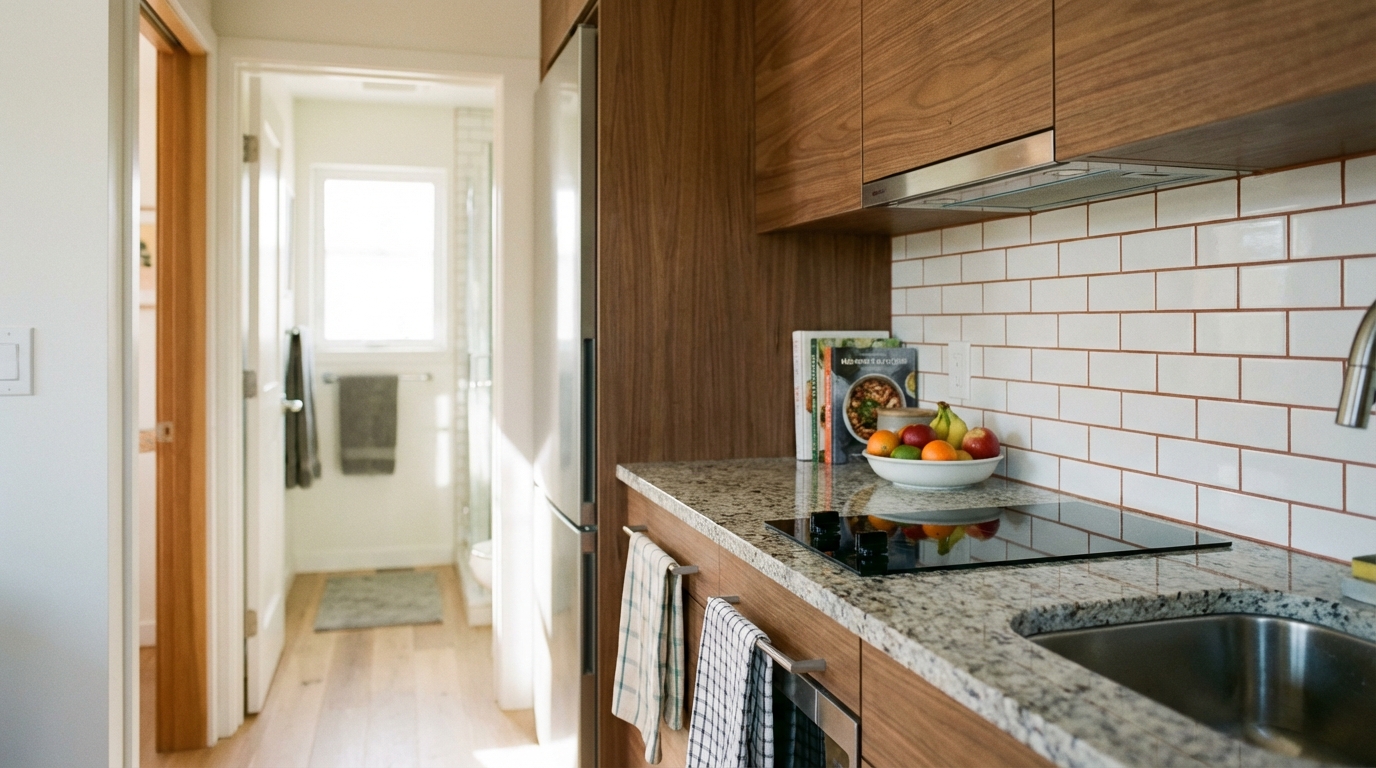
Creating a Junior Accessory Dwelling Unit requires a specific approach to food preparation areas known as efficiency kitchens. Unlike a full ADU, a JADU does not require a traditional stove or a high voltage electrical outlet for a large oven. Instead, the law requires a sink with a maximum waste line diameter of 1.5 inches and a permanent food preparation counter. You must also provide space for small appliances such as a microwave, a hot plate, or a toaster oven to meet the functional needs of a tenant. These specialized kitchen standards make the conversion process significantly more affordable by avoiding expensive electrical panel upgrades or gas line extensions.
One of the most distinct advantages of a JADU is the legal allowance to shared sanitation facilities with the primary residence. While a standard ADU must have its own private bathroom, a JADU can utilize an existing bathroom within the main home’s footprint. This shared arrangement is a key reason why JADUs are often compared to roommate style living situations. If you choose this path, the unit must have an internal connection to the main house to ensure the tenant has direct access to the shared bathroom. This flexibility reduces plumbing costs and allows homeowners to repurpose existing square footage with minimal structural changes.
The integration of these specific standards allows for a much faster permitting and construction timeline than a detached unit. By focusing on an efficiency kitchen and utilizing existing bathrooms, you can maintain the home’s original exterior appearance while adding a functional rental space. These rules are designed to encourage low cost housing within the existing housing stock. Homeowners should verify local building codes to ensure that specific appliance choices and layout designs comply with safety regulations. This streamlined approach provides a practical path for those looking to maximize property utility without a major renovation.
Owner Occupancy Mandates And Rental Use Restrictions
One of the most significant legal distinctions between a standard ADU and a Junior ADU involves the strict owner-occupancy mandates mandated by California state law. For a JADU to be legally permitted and utilized, the property owner must reside in either the primary single-family residence or the newly created junior unit itself. This requirement is typically formalized through a deed restriction that is recorded against the property, ensuring that future owners are also bound by these same living arrangements. While California has temporarily suspended owner-occupancy requirements for standard ADUs until 2025, JADUs remain subject to this rule to preserve the residential character of the neighborhood. This mandate ensures that the property remains owner-occupied rather than becoming a dual-income investment property managed entirely off-site.
Rental use restrictions for JADUs also include specific limitations regarding the duration of lease agreements and the division of the property. Because these units are contained within the existing footprint of the home, they cannot be sold separately from the primary residence unless a specific tenancy-in-common or land trust agreement is legally established. Additionally, most local jurisdictions prohibit using JADUs as short-term rentals, meaning any tenant must sign a lease for a period longer than thirty days. These rules are designed to encourage the creation of stable, long-term housing options rather than transient vacation rentals. By integrating these units into the home’s envelope, the state provides a cost-effective way to increase density while maintaining the oversight of a live-in landlord.
Understanding the implications of the deed restriction is vital for homeowners considering the long-term resale value and flexibility of their property. Once the deed restriction is recorded, it serves as a public notice that the JADU cannot be used as a separate entity from the main house. If a homeowner decides to move out and rent both the main house and the JADU to different parties, they would technically be in violation of state law. However, the flexibility to choose which unit the owner occupies allows for creative lifestyle adjustments, such as downsizing into the 500 square foot JADU while renting out the larger primary home. This setup provides a unique financial advantage for those looking to offset a mortgage while remaining on-site to manage the investment directly.
Independent Access And Fire Safety Compliance Codes
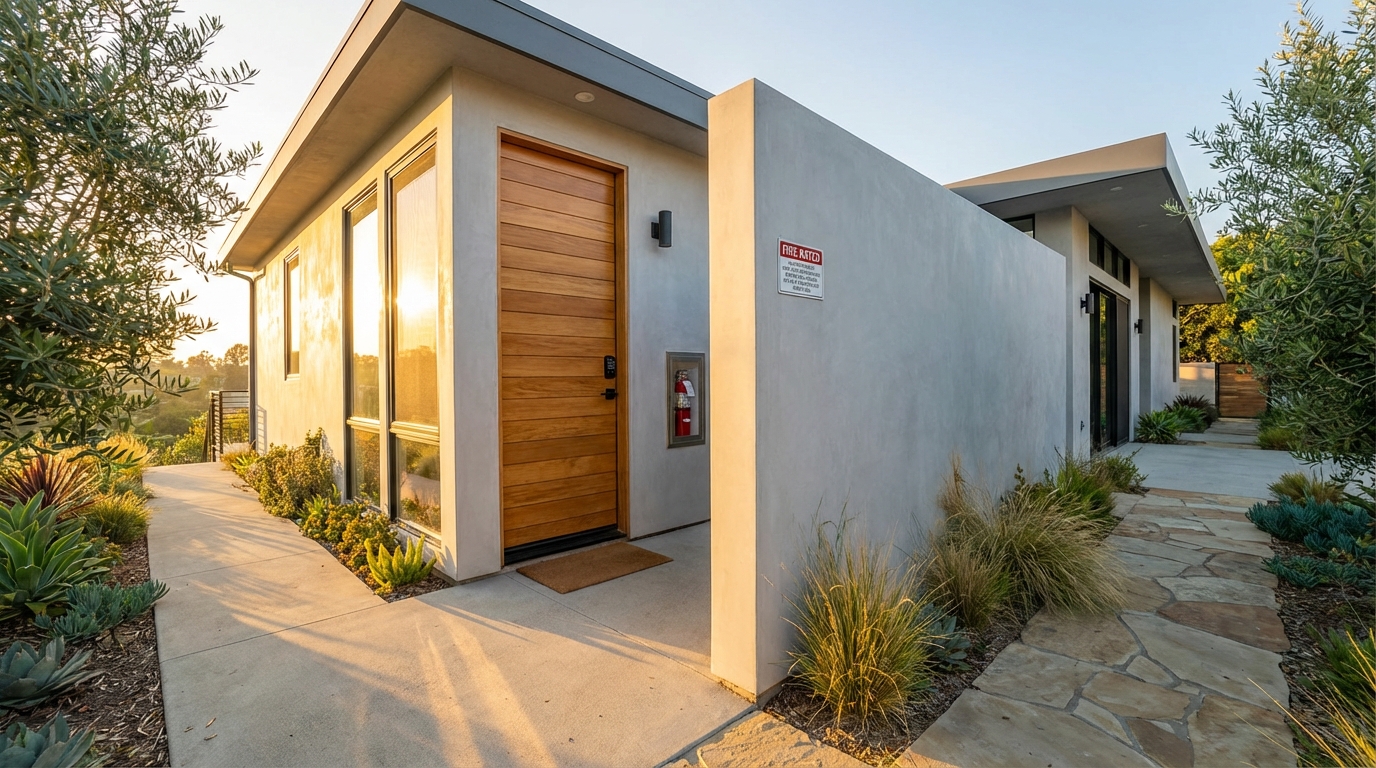
Creating a Junior Accessory Dwelling Unit requires a dedicated exterior entrance that remains completely independent from the primary residence’s main foyer. This specific requirement ensures that the tenant can enter and exit their living space without passing through the main home, effectively establishing the JADU as a private, self-contained suite. While the unit must be located within the existing footprint of the single family home, this separate doorway is a non-negotiable safety and privacy standard. Homeowners often choose to convert an existing side door or install a new one that leads directly to a bedroom or converted garage space. Properly placing this entrance is the first step in meeting local building codes and ensuring the unit functions as a legal rental.
Fire safety compliance is equally critical when carving out a JADU from your existing floor plan. Because the unit shares walls with the primary residence, specific fire separation measures must be implemented to protect both the tenant and the homeowner. This typically involves installing fire-rated drywall on any shared walls and ceilings to create a protective barrier between the two living areas. If there is an interior door connecting the JADU to the main house, it must be a self-closing, fire-rated door that meets local building standards. These regulations are designed to prevent the spread of flames and smoke between units, providing essential peace of mind for everyone under the same roof.
Beyond physical barriers, modern fire safety codes require integrated alarm systems to ensure rapid notification in the event of an emergency. Smoke and carbon monoxide detectors within the JADU must be interconnected with the alarms in the primary residence so that an alert in one area triggers a warning in the other. This synchronized system is a vital safety layer, especially since JADUs are often integrated into the core of the home. Meeting these requirements not only protects your property investment but also ensures that your conversion project is fully compliant with California’s strict residential safety mandates. By addressing these structural and electronic safety features early in the design phase, you can contact professionals to avoid costly retrofits during the final inspection process.
Maximizing Potential Within the 500-Square-Foot Limit
Meeting the specific criteria for a Junior ADU allows homeowners to increase property potential without the high price tag of new construction. By keeping the unit within the existing building envelope and under the 500 square foot limit, you avoid the heavy costs associated with foundation work and external utility extensions. This streamlined approach focuses on interior renovations, such as converting a bedroom or garage into a self-contained suite. Because these units are designed to be integrated into the main home, they offer a faster path to completion and a quicker return on investment. The reduced overhead makes this an ideal strategy for those looking to generate passive income with minimal financial risk.
Capitalizing on these legal standards ensures that you maximize square footage while adhering to state and local housing regulations. Since JADUs typically require simple kitchen facilities and can often share bathroom plumbing with the primary residence, the complexity of the permits and inspections is greatly reduced. This efficiency translates into lower labor costs and fewer material requirements compared to building a detached structure from scratch. Homeowners can effectively turn underutilized space into a valuable asset that increases the overall market value of their property. By following the established guidelines, you can determine how big can an ADU be in your specific jurisdiction to create a sustainable housing solution that benefits both personal finances and the local community.
Frequently Asked Questions
1. What is the maximum size allowed for a Junior ADU?
A Junior ADU is strictly capped at a maximum of 500 square feet. This specific size limit ensures the unit remains subordinate to your primary residence while providing a functional, independent living space.
2. Can I build a Junior ADU as a separate building in my backyard?
No, a JADU must be contained entirely within the structural envelope of your primary residence. This includes conversions of spare bedrooms or attached garages that share a common wall with the main house.
3. What are the kitchen requirements for a legal JADU?
You must install an efficiency kitchen that includes a sink, a cooking appliance, and a food preparation counter. These specialized kitchen standards are designed to maximize utility within the 500 square foot limit.
4. Do I need to add an exterior entrance for my Junior ADU?
Yes, you are required to provide an independent exterior entrance for the unit. This ensures the tenant or occupant can enter and exit the residence without passing through the main living area of the primary home.
5. Can I convert my attached garage into a JADU?
Yes, converting an attached garage is a common way to meet JADU requirements because it sits within the existing footprint of your home. As long as the garage shares a wall with the main house, it qualifies for this streamlined conversion process.
6. What is the main benefit of choosing a JADU over a standard ADU?
A JADU allows you to avoid the heavy costs and complex zoning hurdles associated with detached construction. By working with an ADU construction company within your existing floor plan, you can increase property value and generate passive income more efficiently.