
Unlocking the hidden potential of a home often starts by looking up rather than out. In 2025 and 2026, assessing attic conversion feasibility has become a top priority for homeowners seeking to maximize property value without the logistical challenges of expanding a building’s footprint. This strategic renovation transforms storage into premium living space, but success hinges on a balance of structural integrity and local building regulations.
Before committing to a design, you must determine if the existing roof structure can physically and legally support a habitable room. From the specific 7 and 7 Rule regarding ceiling height to the differences between rafter and truss framing, these technical requirements dictate the project’s viability. Navigating these constraints early ensures the investment results in a safe, compliant, and profitable addition to the home.
Key Takeaways
- A legally habitable attic must meet the ‘7 and 7 Rule,’ requiring at least 70 square feet of floor space that is at least seven feet wide, with 50 percent of the area maintaining a 7.5-foot ceiling height.
- Traditional rafter framing is significantly more cost-effective for conversions than modern truss systems, which require expensive structural engineering to remove the W-shaped supports blocking the living area.
- Floor structures must be reinforced with sister joists or engineered wood to upgrade load capacity from ‘dead load’ storage standards to a ‘live load’ of at least 30 pounds per square foot.
- Legal conversion requires a permanent, fixed staircase for primary access and a secondary emergency exit, such as a code-compliant egress window or dormer.
Structural Integrity And The Seven Foot Rule
Meeting the structural and legal requirements of the 7 and 7 Rule is the first hurdle for homeowners looking to expand vertically. Building codes generally dictate that a finished attic must contain at least 70 square feet of floor space to be considered a habitable room. Beyond the total area, the space must measure at least seven feet in any horizontal direction to ensure it is functional for furniture and movement. This regulation prevents cramped renovations that fail to add genuine value to the property. For those with limited lot sizes, these standards provide a clear roadmap for turning unused air into a legal bedroom or office.
Height requirements are equally stringent and often represent the biggest challenge in older homes. At least 50 percent of the required floor area must maintain a ceiling height of at least 7.5 feet to meet modern safety and comfort standards. This vertical clearance is essential for proper ventilation and to ensure the space does not feel claustrophobic or unsafe. If the current roofline sits slightly below this threshold, you may need to consider adding dormers to create the necessary headroom. These structural modifications allow you to bypass the constraints of a small backyard by reclaiming the existing volume under the roof.
The feasibility of a conversion also hinges on the type of internal framing supporting the roof. Homes built with traditional rafters, which are simple internal beams forming a triangle, are much easier and more cost-effective to convert. In contrast, modern homes often use manufactured trusses with W-shaped supports that occupy the center of the room. While trusses can be modified to create an open living area, doing so requires significant structural engineering and investment. Understanding these physical limitations early in the planning process helps homeowners determine if a vertical expansion is a viable alternative to a traditional ground-floor addition.
Rafter Versus Truss Roof Framing Constraints
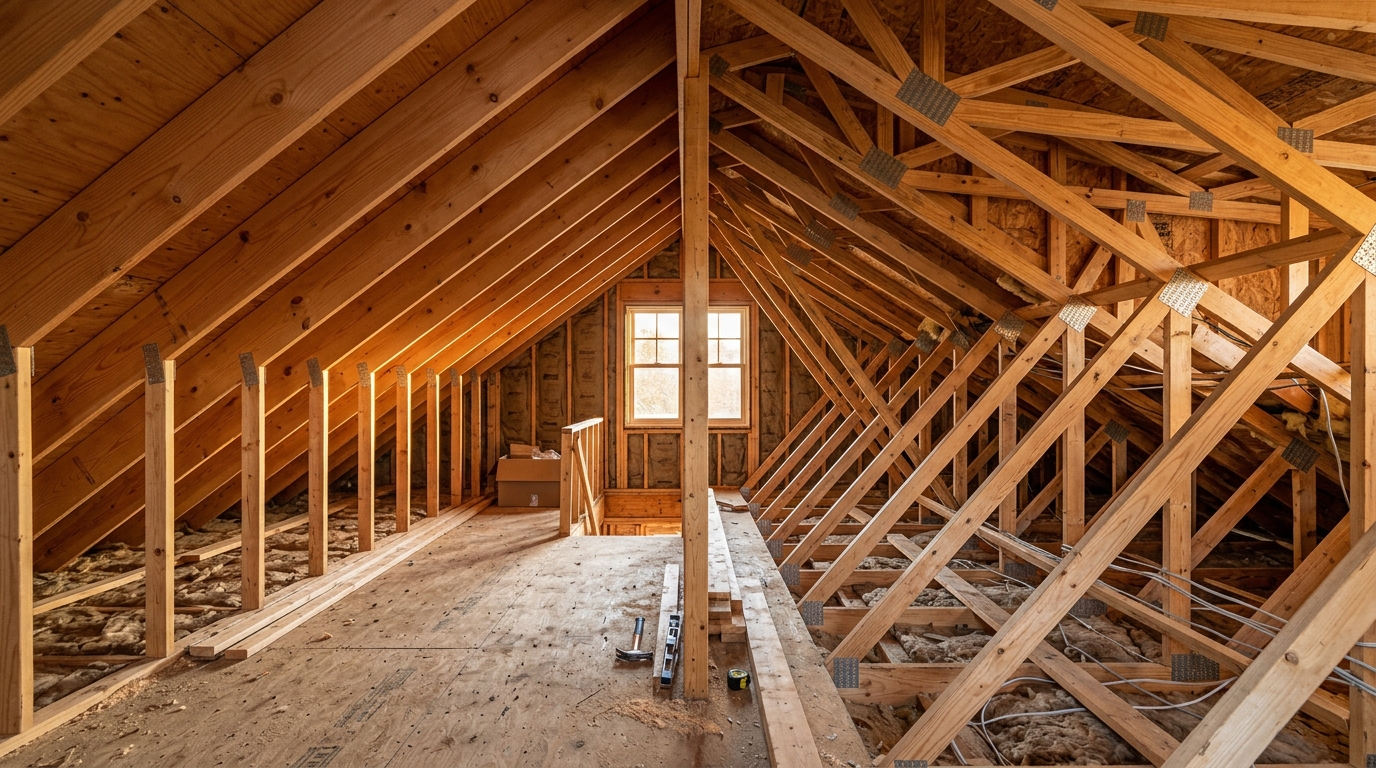
The internal architecture of a roof is the primary factor in determining whether an attic conversion is a straightforward renovation or a complex engineering feat. Traditional rafter and truss framing, commonly found in older homes, creates an open, triangular void that is naturally suited for habitation because the support beams run along the perimeter of the roof. This stick-framed approach leaves the center of the attic clear, allowing homeowners to maximize vertical expansion without navigating a forest of wooden supports. For those on tight lots, this existing open volume represents an opportunity to add square footage within the home’s current footprint.
In contrast, many modern homes utilize manufactured W-shaped trusses that crisscross the attic space to distribute weight across the exterior walls. These web-like structures are highly efficient for structural integrity but make the attic virtually impassable and difficult to convert into a living area. While it is technically possible to alter trusses to create a habitable room, doing so requires extensive structural engineering and the installation of new support beams to maintain stability. Because this process is significantly more expensive and labor-intensive, homes with rafters remain the most feasible candidates for a cost-effective vertical build.
Beyond the physical layout, the type of framing also dictates how easily you can meet modern building codes for ceiling height and floor load. Rafter-framed attics often provide the necessary clearance for the 7 and 7 rule, which requires a specific amount of floor space to have a minimum ceiling height. If a home features traditional rafters, you are likely starting with a structural shell that can be reinforced and insulated with minimal disruption to the floors below. This makes vertical expansion an ideal solution for families who need more space but do not have the yard depth required for a traditional rear or side addition.
Joist Load Capacity And Floor Reinforcement
Transitioning an attic from a storage area into a habitable living space requires a significant shift in structural engineering standards. Most standard attics are originally designed to handle dead loads, which refers only to the weight of the building materials and limited storage. To meet modern building codes for a residential conversion, the floor must be upgraded to support a live load of at least 30 pounds per square foot. This ensures the structure can safely accommodate the weight of furniture, occupants, and daily movement without compromising the integrity of the home. For homeowners with limited lot space, this vertical reinforcement is the essential first step in unlocking hidden square footage.
Reinforcing the joists is often the most critical task in the feasibility phase of an attic project. If existing ceiling joists are too thin or spaced too far apart, contractors typically install sister joists to double the strength of the framework. This process involves nesting new, higher grade lumber alongside the original beams to create a rigid and level platform for the new subfloor. In some cases, steel plating or engineered wood products may be used to provide the necessary stiffness without adding excessive bulk to the floor assembly. These upgrades prevent sagging and vibrations, ensuring the new room feels as solid as any other floor in the house.
Choosing to build upward rather than outward is a strategic move for homeowners who cannot expand their footprint due to property lines or zoning restrictions. While reinforcing the floor requires a focused investment, it is often more cost effective than pouring a new foundation for a backyard addition. By focusing on load capacity early in the planning process, you can determine exactly how much weight the structure can bear for heavy items like bathtubs or built-in cabinetry. This structural foundation transforms an underutilized crawlspace into a high-value asset that significantly increases the total living area of the property.
Egress Requirements And Permanent Staircase Access
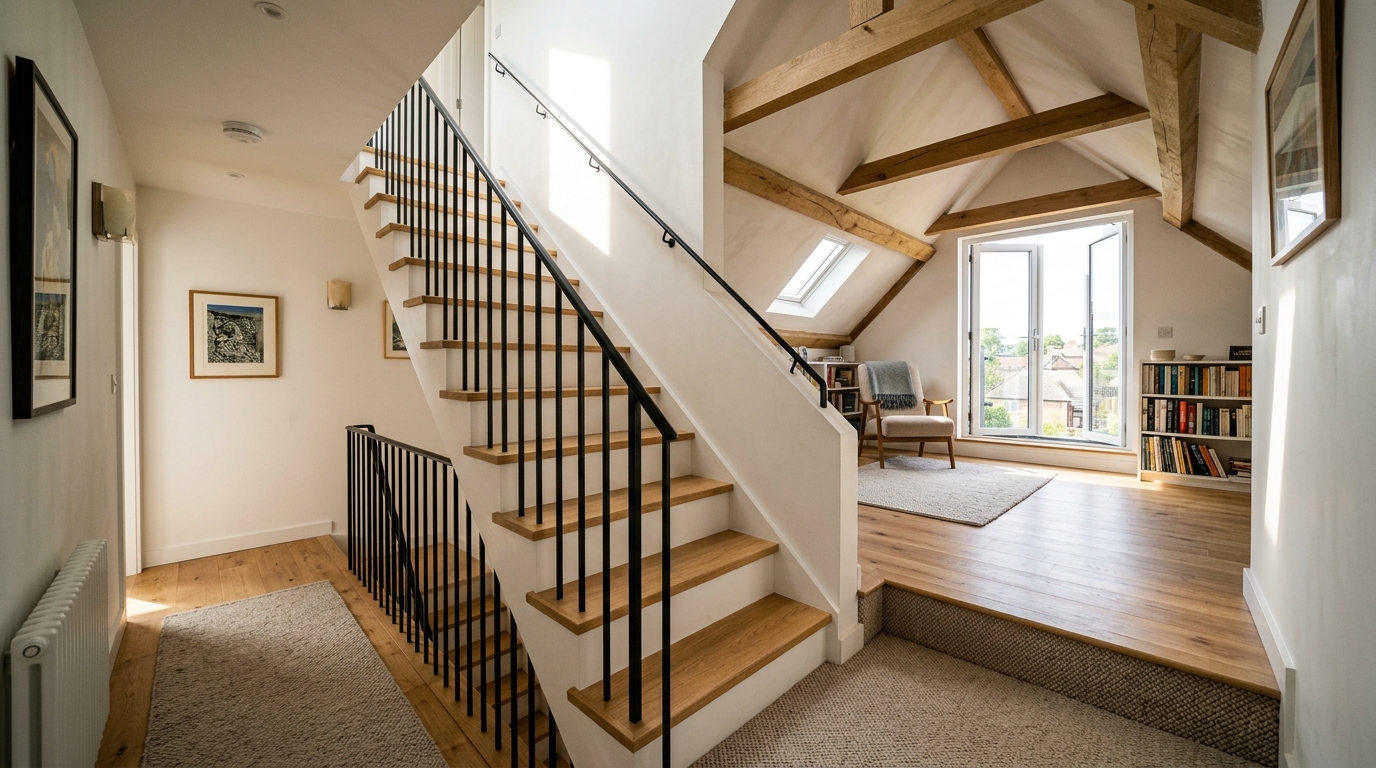
Transitioning an attic into a functional living area requires more than just floorboards and insulation, as building codes mandate strict safety standards for entry and exit. For homeowners looking to maximize their existing footprint, the installation of a fixed staircase is often the most significant hurdle in the feasibility phase. While pull-down ladders or spiral steps might save space, most jurisdictions require a fixed, traditional staircase to qualify the attic as a legal bedroom or office. This staircase must meet specific width and tread depth requirements to ensure that residents can move between floors safely. Planning for this vertical access early is essential, as the staircase footprint will consume space on the floor below.
Safety regulations also demand a secondary method of escape in the event of an emergency, commonly referred to as egress. This typically involves the installation of egress windows that are large enough for an adult to crawl through and low enough to the floor to be easily accessible. For many attic conversions, this requirement is met by installing dormer windows, which simultaneously increase the usable square footage and improve natural light. These windows must meet specific opening dimensions to comply with local fire codes, ensuring the new space is safe. By prioritizing these structural exit requirements, homeowners can successfully unlock the hidden potential of their roofline without the need for a backyard expansion.
Assessing the Feasibility of Vertical Expansion
Ultimately, determining the feasibility of an attic conversion is the most critical step for homeowners looking to maximize their existing property footprint. While backyard builds are popular, vertical expansion offers a way to gain square footage without sacrificing outdoor space on a limited lot. You must ensure the structure meets the 7 and 7 rule, which dictates specific height and floor area requirements for a space to be legally habitable. Navigating these building codes is essential for ensuring the safety of the occupants and the long-term value of the investment.
Structural integrity serves as the backbone of any successful attic transformation, especially when transitioning from storage to living space. Most attics were originally designed to support only light loads, meaning floor joists and roof framing may require significant reinforcement to handle the weight of furniture and foot traffic. Homes with traditional rafter systems offer the most straightforward path forward, whereas those with complex truss systems require more intensive engineering solutions. Because these technical requirements are so specific to a home’s unique design, consulting with a professional ADU contractor or structural engineer is a necessary first step.
Beyond the physical framing, you must also account for legal zoning and the integration of essential utilities like HVAC, plumbing, and electricity. Converting an attic into a functional suite or office requires careful planning to ensure all systems are up to current standards and properly permitted. These projects remain one of the most effective ways to increase property value in dense markets where land is at a premium. Similarly, homeowners might choose to build an ADU above a garage to achieve similar density goals. By verifying these technical and legal checkpoints early in the process, you can confidently maintain a home addition architectural style that turns an overlooked crawlspace into a high-value asset.
Frequently Asked Questions
1. What is the 7 and 7 Rule for attic conversions?
The 7 and 7 Rule requires a finished attic to have at least 70 square feet of floor space with a minimum width of seven feet in any horizontal direction. These dimensions ensure the room is legally habitable and functional for furniture and daily movement.
2. How high does my attic ceiling need to be to meet building codes?
At least 50 percent of the required floor area must maintain a ceiling height of at least 7.5 feet. This vertical clearance is House essential for proper ventilation, safety, and comfort in a modern living space.
3. Can I convert my attic if it has truss framing?
Truss framing is more complex to convert than traditional rafter framing because the W-shaped supports often occupy the center of the space. You will likely need a structural engineer to design a solution that redistributes the weight before the space becomes usable.
4. Why is attic conversion feasibility a priority in 2025 and 2026?
Homeowners are increasingly looking to maximize property value without expanding their building’s footprint. Converting an existing attic into premium living space is a strategic way to add square footage while avoiding the logistical challenges of a traditional home addition.
5. What determines if an attic can legally be considered a bedroom?
To be classified as a legal bedroom, the space must meet specific square footage minimums and height requirements. It must also comply with local building regulations regarding structural integrity, emergency exits, and natural light.
6. What is the first step in assessing my attic’s potential?
You must first determine if your current roof structure can physically and legally support a habitable room. Evaluating the difference between rafter and truss framing and measuring your existing ceiling heights will dictate the project’s overall viability.