
The kitchen island is the heart of the modern home, evolving from a simple prep station into a functional hub for cooking and cleaning. While adding a sink or dishwasher significantly boosts utility and resale value, calculating kitchen island plumbing costs involves more than just picking out a stylish faucet. This investment requires a strategic look at infrastructure, as moving water and waste lines across a floor is a complex engineering task.
Understanding the financial breakdown of this project is essential for avoiding budget shocks. From the labor-intensive process of trenching through concrete slabs to the technical nuances of specialized venting systems, every decision beneath the floorboards impacts the final invoice. By mastering the variables that drive professional plumbing rates, you can transform a kitchen layout with confidence and precision.
Key Takeaways
- The home’s foundation is the primary cost driver, as installing plumbing in a concrete slab requires expensive trenching and excavation that can triple labor costs compared to accessible crawl spaces.
- Island sinks require specialized venting solutions, such as Air Admittance Valves or island fixture loops, because they lack the vertical wall space for standard vent stacks.
- Maintaining a precise drainage slope of one-quarter inch per foot is critical to prevent clogs, often requiring complex structural modifications if the island is far from the main waste line.
- Navigating legal requirements through proper permitting and professional inspections is essential to ensure the installation meets safety codes and protects the home’s resale value.
Primary Factors Influencing Island Plumbing Labor Rates
The foundation of a home determines the complexity and labor cost of installing island plumbing. If a home is built on a crawl space or has a basement, plumbers can typically access the underside of the subfloor to run new supply and drain lines with relative ease. This accessibility reduces the total man-hours required, as professionals can navigate the joist bays to reach the island’s precise location. While this is the more affordable scenario, you should still budget for the time spent securing pipes and ensuring they meet strict local building codes for support and insulation.
Homes built on a concrete slab require a significantly more invasive and expensive labor process known as trenching through concrete. To reach the center of the kitchen, the plumbing team must use a jackhammer to cut through the existing concrete, excavate the soil beneath, and haul away the debris before laying the new pipes. Once the lines are installed, the trench must be backfilled and the concrete professionally patched to create a level surface for new flooring. This heavy labor adds several days to the project timeline and involves specialized equipment, often doubling or tripling the labor costs compared to a crawl space installation.
Beyond the physical digging, the labor rate reflects the technical precision required to maintain a proper drainage slope over a long distance. Because an island is disconnected from the main walls, a plumber must calculate the exact pitch of the drain line beneath the floor to prevent future clogs and backups. They also have to account for the unique venting requirements of an island, which often involves more intricate work than a standard wall sink. These technical challenges require a high level of expertise, making the labor portion of the budget a critical investment in the long-term functionality of a kitchen renovation.
Material Expenses For Island Sinks And Gas Lines
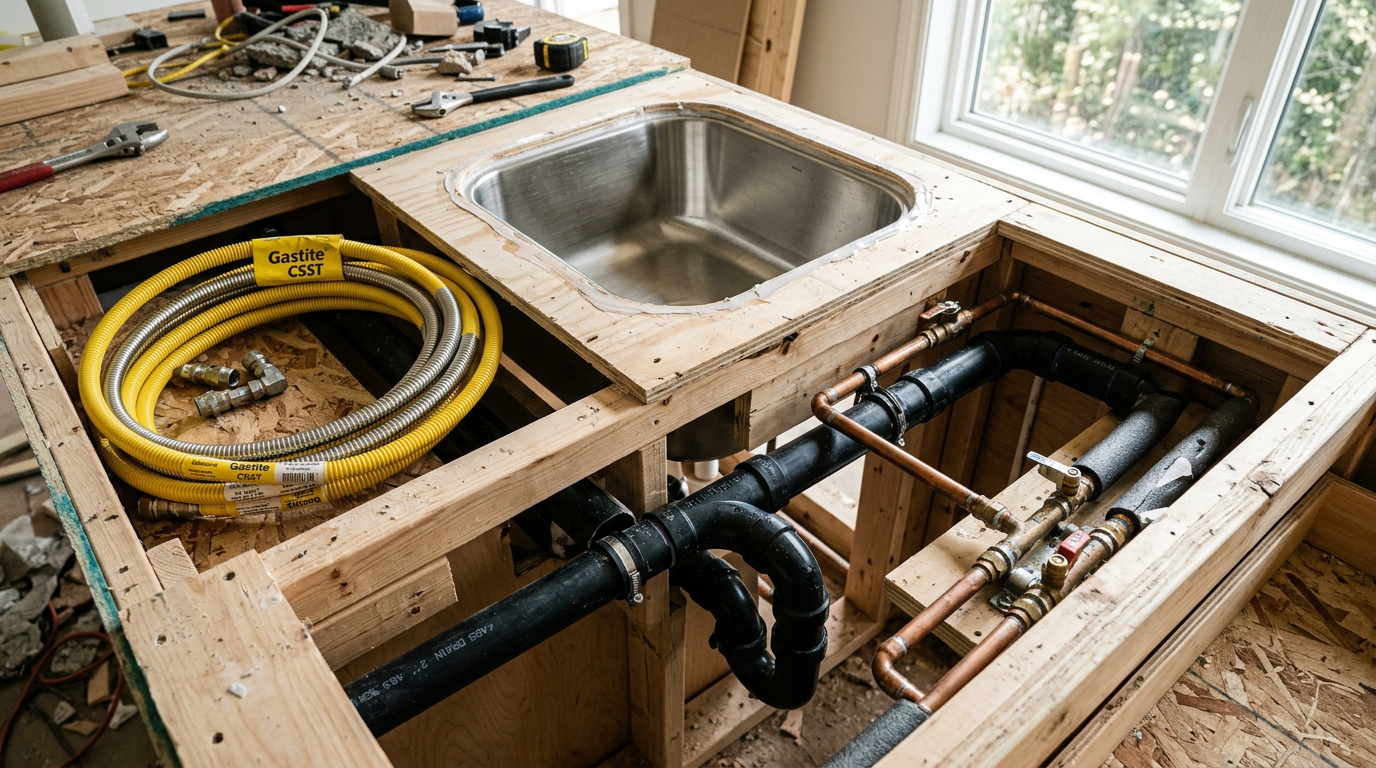
Selecting the right piping material is a foundational decision that impacts both the immediate budget and the long-term durability of a kitchen island. Copper remains a premium choice for supply lines due to its longevity and natural antimicrobial properties, though it carries a higher price tag for both the metal itself and the skilled labor required for soldering. Many homeowners now opt for PEX piping, which offers a flexible and cost-effective alternative that is easier to maneuver through tight floor joists. While PEX can reduce material costs by up to 60 percent compared to copper, you must also account for the specialized fittings and manifolds required for a secure installation. Integrating a gas line for a cooktop adds another layer of expense, typically requiring black iron or CSST piping that must meet strict local safety codes.
Beyond the supply lines, the unique venting requirements of an island sink introduce specialized venting systems and hardware costs that are often overlooked during the initial planning phase. Because a standard vertical vent stack cannot be hidden in a central island, plumbers must utilize either an Air Admittance Valve (AAV) or more complex island fixture loops. An AAV is generally the more affordable solution, acting as a one-way mechanical valve that allows air into the drainage system without letting sewer gases out. However, if local building codes require a traditional bow vent or island loop, the cost increases due to the additional piping and precise labor needed to create a self-venting system beneath the floor. These specialized components ensure drainage remains efficient and odor-free, making them a critical investment in the functionality of the renovation.
Hidden Costs Of Rerouting Existing Kitchen Drainage
One of the most significant budget surprises in a kitchen remodel is the technical requirement for maintaining a proper drain slope beneath the floor. Plumbing codes typically require a specific pitch, usually a quarter-inch per foot, to ensure that wastewater flows effectively and prevents frequent clogs. When an island is located far from the original plumbing footprint, achieving this necessary angle often requires cutting deep into a concrete slab or significantly modifying floor joists. These structural adjustments add substantial labor hours and engineering complexities that are rarely included in a basic installation estimate.
Beyond the challenges of gravity and slope, the relocation of existing main stacks can lead to a spike in total project costs. If a new island layout interferes with the primary vertical vent or waste stack that serves the entire house, moving that infrastructure involves opening walls on multiple floors. This process requires not only extensive plumbing work but also significant costs for professional drywall repair, painting, and structural reinforcement. Homeowners must account for these secondary expenses when planning an island sink, as the ripple effect of moving a main line can easily double the initial plumbing quote.
Careful planning during the design phase is essential to avoid these financial pitfalls and ensure a functional drainage system. Learning how to choose the right layout for your kitchen while working around existing structural constraints rather than fighting against them can save thousands of dollars in rerouting fees and material costs. It is also important to consider the long-term maintenance implications of complex drainage paths, as simpler routes are less prone to issues over time. By prioritizing the technical feasibility of the drain lines early on, you can create a high-end kitchen island that remains both beautiful and budget-friendly.
Permitting Fees And Professional Plumbing Inspection Costs
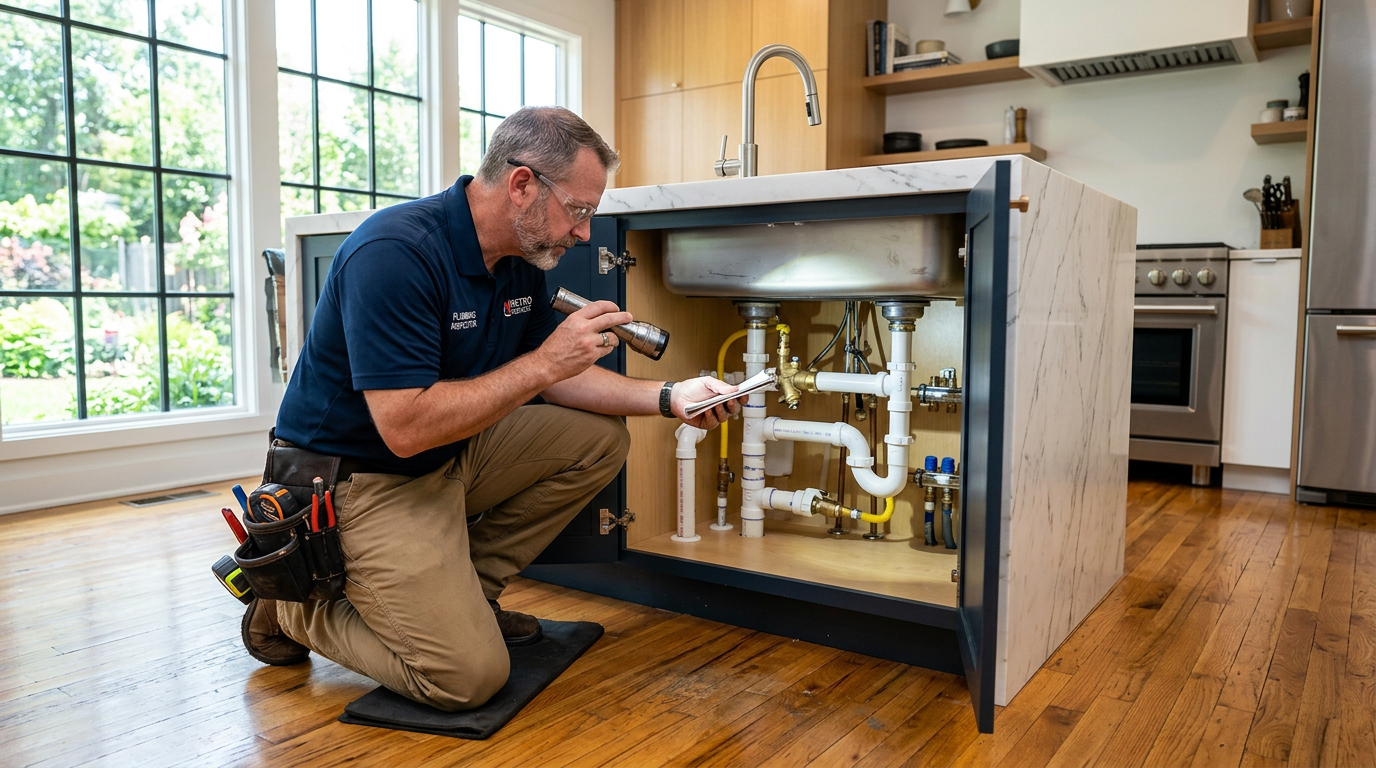
Navigating the administrative side of a kitchen remodel is a critical step that many homeowners overlook during the initial budgeting phase. Local building permits for island plumbing typically range from $50 to $500 depending on the municipality and the total scope of the project. These fees are not merely a formality, as they grant the legal authorization required to alter integrated water and waste systems. Failing to secure the proper paperwork can lead to significant fines or complications when selling the property. Most professional plumbers will include the cost of pulling these permits in their initial quote, but it is essential to verify this early to avoid unexpected line items.
Professional inspections are the second half of the administrative equation and are mandatory to ensure the new island meets current Uniform Plumbing Code (UPC) or International Plumbing Code (IPC) standards. An inspector will typically visit the site twice, once for the rough-in phase and again for the final sign-off, to verify that drainage slopes and venting systems are installed correctly. These visits ensure that the island sink will drain efficiently and that sewer gases are properly diverted away from living spaces. While some inspection fees are bundled with the permit, specialized third-party assessments may incur additional costs. Investing in these professional evaluations provides peace of mind that a high-value renovation is both safe and structurally sound.
Budgeting for these regulatory costs early in the planning process prevents mid-project financial strain and keeps the timeline on track. Because kitchen islands often require unique venting solutions, such as air admittance valves or specialized loop vents, inspectors pay close attention to these specific technical details. Having a certified professional oversee the work ensures that the complex task of running lines through a slab or crawl space is done according to the highest safety benchmarks. These oversight costs should be viewed as an insurance policy for the investment, protecting the functionality of the kitchen for years to come. By accounting for permit fees and inspection schedules from day one, you ensure a smoother transition from the construction phase to the final reveal.
Budgeting for Your Kitchen Island Plumbing
Ultimately, the investment required for kitchen island plumbing typically ranges from $1,500 to $4,500 depending on the complexity of the foundation and the proximity to existing main lines. While this technical phase of a remodel represents a significant portion of the budget, it is the foundation for the most functional area of the kitchen. Homeowners should prioritize professional labor and high quality materials over aesthetic upgrades if funds are limited during the initial build. Investing in proper drainage and venting now prevents expensive repairs and floor removals in the future.
Navigating the balance between luxury features and a realistic renovation budget requires a strategic approach to the layout. If estimates are higher than expected, consider placing the sink or dishwasher at the end of the island closest to the existing stack to reduce trenching costs. You can also save by choosing standard PEX piping while maintaining a higher budget for a specialized island vent valve. By understanding these technical cost drivers, you can make informed decisions that add long term value to a home without overextending financial resources. Choosing a comprehensive professional kitchen remodel ensures that every technical detail, from plumbing to layout, is handled with expertise.
Frequently Asked Questions
1. How much more does it cost to install plumbing in a kitchen island on a concrete slab?
Installing plumbing on a concrete slab is significantly more expensive because it requires trenching. You must budget for the labor of jackhammering through the concrete, excavating soil, and hauling away debris before the pipes can be laid.
2. Is it cheaper to add a sink to an island if I have a crawl space?
Yes, having a crawl space or basement typically lowers costs because it provides easier access to the underside of the subfloor. Plumbers can run supply and drain lines through the joist bays without the need for invasive demolition of the flooring.
3. What are the main factors that drive up professional plumbing rates for an island?
The primary cost drivers are the foundation type of the home and the distance from the main water and waste lines. Complexities like specialized venting requirements and the need to secure pipes according to local building codes also add to the total man hours required.
4. Do I need a special venting system for a kitchen island sink?
Kitchen islands require specific venting solutions, such as an island fixture vent or an air admittance valve, because they lack a wall to house a standard vertical vent stack. These specialized systems require technical expertise to install correctly and will impact the final invoice.
5. Will adding a sink or dishwasher to my island increase my home’s value?
Adding plumbing fixtures to an island significantly boosts both the utility of the kitchen and the home’s overall resale value. While the initial investment is high, transforming the island into a functional hub for cooking and cleaning is a major selling point for modern buyers.
6. How can I avoid unexpected budget shocks during an island plumbing project?
You can avoid financial surprises by mastering the variables that drive labor rates, such as the home’s infrastructure and the technical nuances of waste line placement. Understanding whether a project requires trenching or simple joist navigation allows you to set a realistic budget before the work begins.